
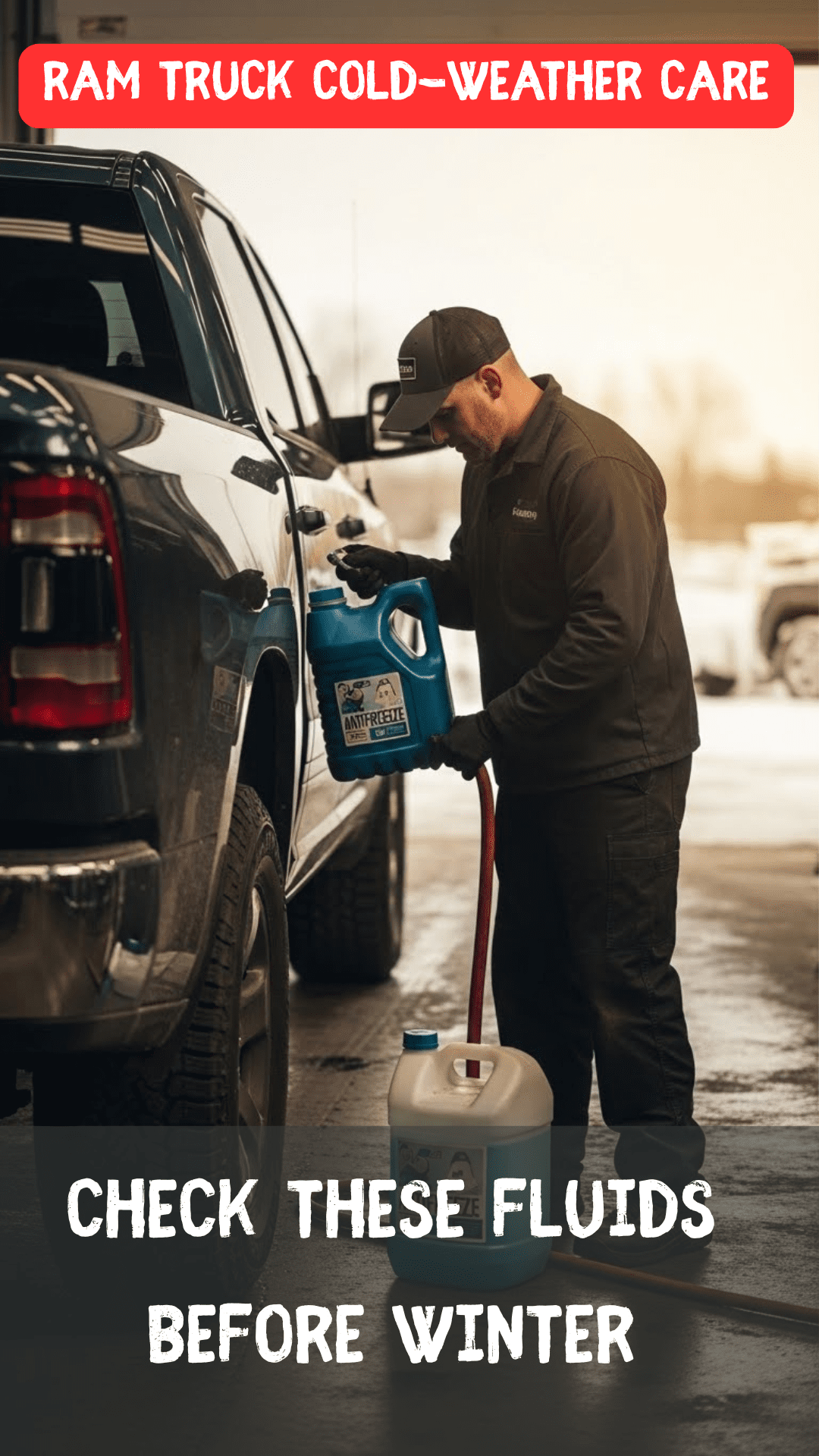
Winter maintenance of your ram truck ensures that your pickup will be running well even during the freezing weather, snow, ice, and the road salt. Winter is the most brutal to the trucks, and Rams require special attention to be able to cope with cold weather without collapsing.
Failure to prepare during winter results in dead batteries, frozen fluids, rust damages, and getting stuck in the cold. We will take you through all the steps you should take to winterize your Ram and maintain it all winter long.
The importance of Ram Truck Winter Maintenance.
The winter conditions kill trucks even more than regular driving. Low temperatures put a strain on all systems and salt rusts through metal like it is crazed.
Your Ram has special winter problems that cars do not have. Larger engines require more time to start, large batteries consume more energy, and increased surface areas gather more ice and snow.
What Winter Does to Your Ram
Cold weather attacks your truck in various ways:
Battery power reduces by 30-50% in freezing conditions.
Cold starting is more difficult with oil.
Engine blocks may be broken by coolant failures.
Tire pressure decreases by 1-2 PSI/10 o F.
Frame, body and brake lines are consumed by salt corrosion.
Diesel engines below 15 o F.
Rubber seals crack and leak
All owners of Rams in snowy states require a good winter maintenance program. Neglecting it will cost you thousands in repairs.
Ram Winter Checklist-Maintenance.
This is a list of things you should have done before winter strikes your Ram. Bang these out during a weekend and you are good.
Battery Test and Service
The number one winter failure point is your Ram battery. Cold cranking amps are significantly reduced as the temperatures decrease.
Battery maintenance steps:
Load test battery (this is free in most auto parts stores)
Wipe off corrosion on terminals and cables.
Connect all the cables (loose cables lead to starting problems)
Check battery age (substitute age 4+ years old)
Place dielectric grease on terminals.
Take into account battery blanket in case of extreme cold.
Before winter, batteries that display less than 12.4 volts must be changed. Do not run the danger of being stuck–new batteries will cost 150-200.
Coolant System Check
Antifreeze protection literally helps your engine to be destroyed. Frozen coolant breaks engine blocks, and that translates to $5,000 or more repairs, or replacement of the engine.
Coolant maintenance:
Minimum test antifreeze -30F.
Change and empty coolant after every 5 years.
Inspect hose and radiator leaks.
Check the level of coolant reservoir.
Test radiator cap pressure
Replace deteriorated hoses before they break.
Take a 10 dollar antifreeze tester found at any automobile parts store. It only lasts 2 minutes and has the potential to save your engine.
Winter Grade Oil Change.
Cold weather oil circulates more efficiently when it is cold and this keeps your engine safe in cold starts. It is at this point that 90 percent of engine wear occurs.
Winter oil service:
Replace 0W -20 or 5W -30 (check owner manual)
Optimal cold flow is full synthetic.
Before winter change oil and filter.
Test the leak undercarriage.
Better protection is possible with synthetic oil.
Synthetic oil is more expensive by 20 dollars but it flows at -40 F as compared to conventional oil which becomes molasses. Worth every penny in winter.
Ram Tire Preparation of Winter.
Winter driving safety is made or broken by tires. Bad tires on your Ram make it a 6,000-lb sled that can be driven nowhere.
Winter Tire Options
All-season tires are efficient in mild winters and do not cut it in severe snow and ice. Know your options.
Tire choices for Rams:
Winter tires: Maximum traction, cold compound.
All-terrain 3PMSF: Fair trade-off between summer and winter.
studded tires: Ultimate ice grip (check local laws)
All-season: Fine in southern states only.
The 3-peak mountain snowflake (3PMSF) rating implies that tires can actually be used in winter. This is not available in regular all-seasons.
Tire Pressure Monitoring
When temperatures decrease, tire pressure decreases rapidly. Underinflated tires damage snow handling and fuel economy.
Pressure maintenance:
Weekly pressure in winter.
Add 3-5 PSI above door sticker suggestion.
Check cold tires (not used)
Do not use TPMS warning light.
Check to see whether there are ice cuts or damage.
Every 10 o C of cold temperature causes a loss of approximately 1 PSI in tires. A 30 F swing is equivalent to 3 PSI loss, which is important to traction.
Tire Chain Preparation
Tire chains are used when all other methods fail. Learn to install them when you are not caught in a snowstorm.
Chain tips for Rams:
Get the right size of tires.
Practice in driveway installation.
Rear (2WD) or front (4WD) installed.
Store in cab, not bed (they will be covered with snow)
Check local chain laws and requirements.
Cable chains are easier to use compared to traditional chains but they do not grip as well. Select what suits your level of expertise.
Cold Weather Ram Fluid Checks.
All fluids in your Ram react differently to freezing temperatures. Others thicken, others become frozen and all of them require attention.
Diesel Fuel Treatment
When the temperature is lower than 15F, diesel fuel solidifies. Fuel in gelled form will not pass through your fuel system and you will be stuck.
Diesel winter prep:
Add anti-gel fuel additive in each tank.
Fuel tank must be kept above half full.
Use winter blend diesel (stations change seasonally)
Take into account block heater in case of extreme cold.
Park overnight in garage where possible.
Diesel anti-gel is used to treat various tanks and costs between 10 and 15 a bottle. Much cheaper than towing and fuel system repairs.
Windshield Washer Fluid
Winter washer fluid down to -20 deg F or below eliminates frozen spray lines. Summer fluid is frozen and may break your washer reservoir.
Washer fluid tips:
Empty summer of its fluid.
Fill with winter-rated fluid ( -20 o C minimum)
Test spray before first snow
Keep extra gallon in truck
Check reservoir for cracks
The blue summer fluid freezes at 32o F. Pink winter fluid is used down to 20 or 40 degrees F depending on formula.
Brake Fluid Inspection
Brake fluid takes in moisture as time goes by and the moisture is frozen in the brake lines leading to failure. This is life or death.
Brake maintenance:
Test moisture content of brake fluid.
Replacement when more than 3% moisture (test strips can be bought)
Leak brakes when fluid appears dark.
Check brake lines for rust
Inspect pads and rotors
The cost of replacing the brake fluid is 100-150 in a shop. DIY is 20 dollars in fluid when you know what you are doing.
Ram 4WD System Winter Prep
The four-wheel drive system of your Ram rescues you in the snow, but only when it is functioning properly. Test it before you need it.
4WD System Testing
Check your 4WD system when there is no snow. It is unpleasant to discover that it is broken when you are stuck.
4WD checks:
Switch on 4WD and move forward/back.
Hear grinding or clunking sounds.
Check tight turns binding.
Check 4WD light on dash.
Inspect CV boots for tears
Fluid level of check transfer cases.
Unless the 4WD engages smoothly, have it checked. Repairing during winter is twice as expensive.
Transfer Case Service
Transfer case fluid deteriorates with time. Hard shifting of 2WD to 4WD is caused by old fluid.
Transfer case maintenance:
Change fluid every 50,000 miles
Take appropriate type of fluid (check manual)
Search in old fluid metal shavings.
Check for leaks at case seals
Verify linkage moves freely
The cost of transfer case service in shops is 150-250. DIY is 40 fluid when you are a handyman.
Ram Winter Protection Exterior.
Salt and ice ruin the body and the frame of your Ram. Security is now worth thousands in the future.
Undercoating and Rust Prevention.
Undercoating spray forms a coating between metal and salt. This is the only best rust prevention technique.
Rust prevention steps:
Frame and body spray undercoating.
Stone the wheels and rockers.
Apply before first snow
Reinsure annually to be best insured.
Apply fluid film or other product.
Professional undercoating is between 150 and 300 dollars. Spray cans DIY is 50-100 and 2 hours.
Regular Winter Washing
It sounds like it is futile to wash your Ram in winter but it is essential. Before it rusts away metal, salt must be removed.
Winter washing tips:
Wash every 2 weeks minimum
Pressure washer undercarriage hit.
Wet spray wheel wells.
Do not omit door jambs and hinges.
Do not freeze (water will be trapped)
Shut freezing dry door seals.
Touchless car washes are effective though they do not clean undercarriage effectively. Self serve pressure wash bays are more effective.
Ram Heating System Check
Your heater in your Ram keeps you alive in case of emergencies and comfortable in winter. Make sure it works right.
Heater Performance Test
Check your heating system when you do not need it. Trucks in winter are not only uncomfortable but also dangerous when it is cold.
Heater checks:
Turn on heater to maximum and ensure hot air.
Ensure that all vents blow correctly.
Hear the blower motor sounds.
Sniff of coolant (sweet smell = leak)
Check rear heater (where fitted)
Test defrost on windshield
Low coolant or poor thermostat is typically referred to as weak heat. They are both inexpensive solutions until winter arrives.
Remote Start Contemplations.
Remote start allows your Ram to warm up when you are not in the car. It is not only luxury but it is safety in extreme cold.
Remote start benefits:
Warms engine oil to make it easier to start.
Windshield defrosts prior to driving.
Turns on the heat and warms the cabin.
Prolongs battery life through strain reduction.
Melts ice off wiper blades
Aftermarket remote starts are between 200 and 400 dollars installed. The cost of factory options is between 400 and 600 but are more integrated.
Ram Winter Emergency Kit
Your Ram can save your life with a winter emergency kit. Not dramatic, people die every winter in cars.
Essential Winter Gear
Store this stuff in your Ram all year round in winter:
Must‑have items:
Sleeping bag or warm blankets.
Additional winter clothes and boots.
Flashlight and additional batteries.
First aid kit
Food and water that is not perishable.
Jumper cables or jump pack
Small shovel for digging out
Ice scraper and snow brush
Traction sand or kitty litter.
Phone charger (12V adapter)
Place all in a plastic box in the back seat. Do not bury it in the snow in the bed.
Recovery Equipment
To unstuck, one needs the right tools. Turning tires only digs your grave.
Recovery gear for winter:
Tow strap (not chain)
D‑ring shackles
Recovery boards or floor mats.
Small folding shovel
Tire chains (already mentioned but important)
Tow straps are used to self-recover or assist others and they cost between 20 and 40 dollars. Store it in the cab, not covered with snow in the bed.
Ram Block Heater Installation.
A block heater warms your engine when it is really cold at night. Northern states must have diesel Rams.
Block Heater Benefits
Engine block heaters ensure that it is much easier to start your engine during winter and save your engine.
Block heater advantages:
Easier cold starts below 0°F
Lessens engine wear during start up.
Cabin heats up faster
Improved fuel consumption (reduced warm-up)
Critical for diesel engines
Block heaters are between $50-150 on the heater and installation. Diesel Rams require them in places where the temperature is below 0 o F frequently.
Installation and Use
Not so difficult to install a block heater, when you are a mechanical person. Otherwise the shops are charging 100-200 to install.
Usage tips:
Insert 2-3 hours prior to commencement.
conserve electricity with timer.
Pre-winter check cord before winter.
Coil cord in a nice way to avoid damage.
Turn off the car before driving (it seems self-evident, yet people forget)
Leaving a block heater on overnight consumes power. A timer that is plugged 3 hours prior to start time is perfect.
Common Ram Winter Problems
Be aware of what will go wrong so that you can avoid it or correct it quickly when it occurs.
Hard Starting in Cold
Rams have problems with cold starting in winter. There are many solutions to many causes.
Starting problem fixes:
Battery test and change in case of weakness.
Glow plugs (diesel) break down and do not start.
Problems with the fuel system (gelling on diesel)
Oil that does not allow turnover.
Corroded battery cables
The majority of hard-starting issues are re-traced to the battery. Assume nothing before testing it.
Frozen Door Locks
Frozen locks are a pain in the neck. Prevent them or fix them fast.
Lock freeze prevention:
Apply WD-40 spray locks prior to winter.
Tape keyhole (when you use remote)
Carry de-icer spray on keychain.
Light before insertion of key.
Warm truck first by remote start.
Lock de-icer is priced at five dollars and it comes on a keychain. Keep one handy always.
Dashboard Warning Lights
False warning lights are sometimes caused by cold weather. Know what’s real and what’s not.
Common winter warnings:
TPMS light (tire pressure drop cold to hot)
Check engine (O₂ sensor cold)
ABS light (wheel speed sensor icing)
Battery light (alternator working hard)
TPMS alerts are standard- just pour in air. Other lights should be diagnosed in case they remain on when heated.
Month-by-Month Ram Winter Care.
Months require different attention. Here’s when to do what.
October‑November (Pre‑Winter)
Fall preparation prepares you to be successful:
October/November tasks:
Full winterization checklist.
Change to winter tires (when necessary).
Stock emergency kit
Test all systems
Address any issues found
Do it at the beginning before the stores are overrun with winter preparation appointments.
December-February (Deep winter)
Active winter needs constant maintenance:
Winter tasks:
Wash truck every 2 weeks
Check tire pressure weekly
Monitor battery health
Keep gas tank above half full
Inspect for salt damage
Stay on top of washing. Salt damage occurs quickly and is expensive to repair in the future.
March (Post‑Winter)
Damage is caught before it worsens: Spring inspection.
Spring tasks:
Check frame and body rust.
Touch up paint chips
Check brakes for corrosion
Switch back to summer tires
Cleanse deep interior salt.
In spring look under your Ram. Catch rust early and it’s a $50 fix. Wait and it’s $500+.
Conclusion
Correct winter maintenance of the ram truck keeps your investment safe and you are safe in the harsh weather. One weekend of winterization costs between 200 and 400 in supplies, and prevents thousands of dollars of repair, and leaves you on the shoulder of frozen highways.
Pay attention to the three most important ones: battery health, correct fluids, and rust prevention. These prevent 90% of winter problems in advance. Good tires and an emergency kit will make your Ram tackle whatever winter throws at it.
Winter preparation should not be done when the first snow falls. The month of October is the right month to complete your winterization checklist before the stores become congested. Your Ram will pay you back in years of trouble-free mornings and rust-free service.
Frequently Asked Questions
Q: What is the time to winterize my Ram truck?
A: Begin winterizing in October when the temperatures are not always below freezing. Before the first snow, make sure to fill out your complete checklist with battery test, coolant check, oil change, and tire check. Preparation is better than rush to the repair shops and makes sure that your truck is ready when winter strikes hard.
Q: What is the frequency of washing my Ram during winter?
A: Have your Ram washed at least once in every 2 weeks in winter and pay a lot of attention to the undercarriage. Salt is a quick rusting agent and particularly on frames and brake lines. Wash with touchless or self-serve pressure wash bays, and spray wheel wells and undercarriage completely every wash to eliminate salt build-up.
Q: Should I have winter tires on my Ram truck?
A: That is based on where you are and the conditions of the roads. Winter tires or three-peak mountain snowflake rated all-terrains are a significant difference in traction and safety in regions where snow and ice are common. Southern states are able to operate quality all-season tires throughout the year without problems.
Q: Why will my Ram not start on cold weather?
A: Cold-start issues tend to be traced to weak batteries (loses 3050 percent power in freezing conditions), thick oil in the turnover, faulty glow plugs on diesels, or gelled diesel fuel. Begin with a battery load test, change to winter-weight oil, and fuel additives, should you have a diesel Ram.
Q: How can I avoid rusting my Ram in winter?
A: Coat frame and body with undercoating spray, before winter, wash every 2 weeks, emphasizing undercarriage, and touch up paint chips as soon as possible. Salt is resisted by the use of Fluid Film or other rust prevention sprays. You should park in a garage where possible and should not drive through deep slush where possible.
Q: What is in my Ram winter emergency kit?
A: Warm blankets, extra clothes, flashlight, first aid kit, non-perishable food and water, jumper cables, small shovel, ice scraper, sand or kitty litter to get traction, phone charger. Keep all in the cab, so you can get it in case the snow covers your bed. This kit will literally save your life in case you are stuck.







0 Comments