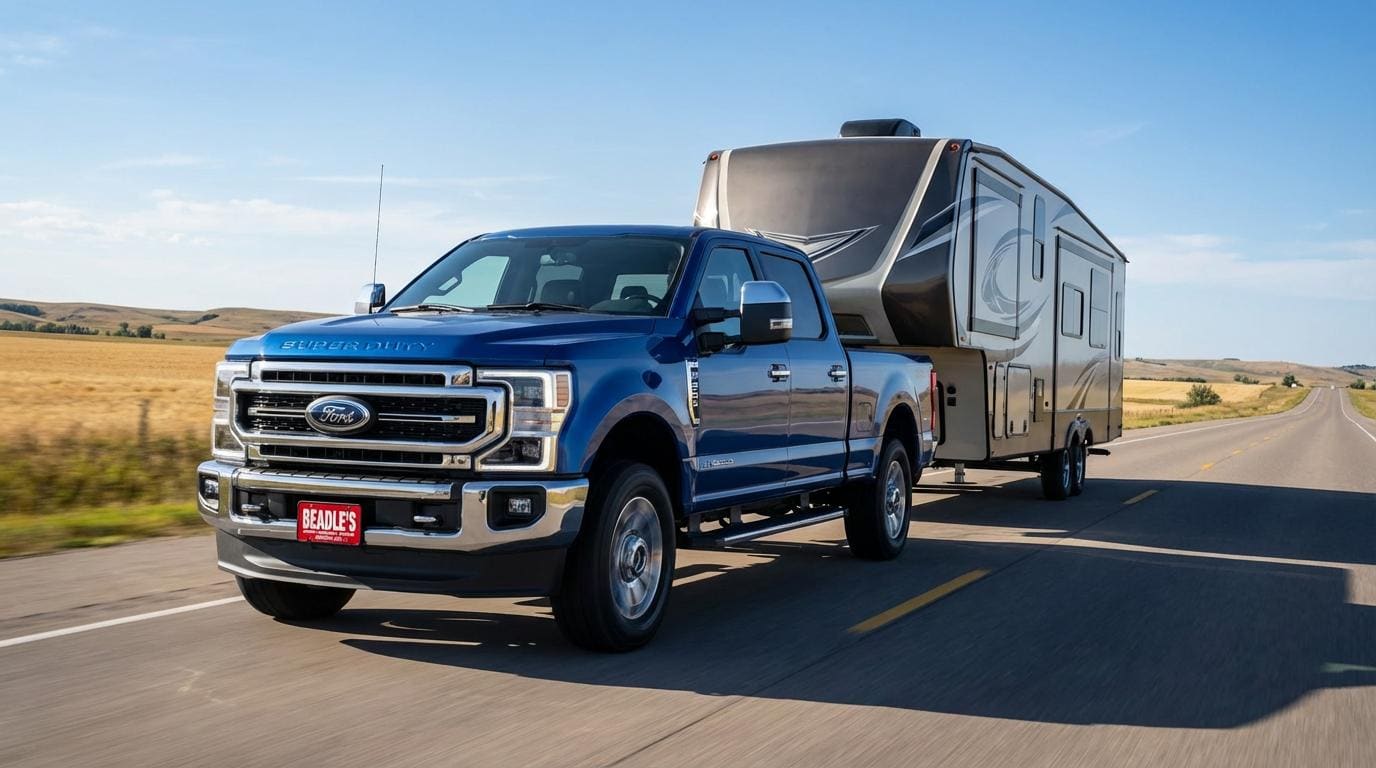
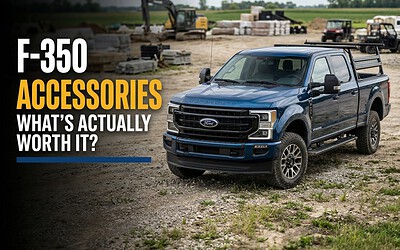
Explore how F-350 accessories affect towing, storage, comfort, and everyday work, plus the fitment and weight limits owners need to understand.
Ford F350 accessories can make a heavy-duty truck more useful for towing, hauling, construction work, and everyday driving. However, the right setup depends on your truck’s model year, cab style, bed length, equipment, and the jobs you expect it to handle.
In 2026, choosing accessories involves more than appearance. Truck owners need to consider towing equipment, cargo protection, electrical upgrades, interior comfort, and the effect added weight can have on available payload.
Whether you use your F-350 for work, camping, hauling equipment, or pulling a fifth-wheel trailer, understanding these accessories can help you make better decisions. The goal isn’t to add everything available. It’s to understand which upgrades solve real problems without creating new ones.
Key Facts at a Glance
- Fitment matters: Accessories must match your F-350’s model year and configuration.
- Payload has limits: Toolboxes, bumpers, hitches, and other equipment add weight.
- Towing accessories need careful planning: Hitch compatibility, trailer clearance, and weight ratings are essential.
- Protection can reduce wear: Bed liners, floor liners, and mud flaps help protect frequently used areas.
- Electrical upgrades require care: Additional lighting and powered equipment need suitable wiring and circuits.
- Appearance modifications can affect function: Larger tires and suspension changes may influence handling, clearance, and towing behavior.
What Are Ford F350 Accessories?
Ford F350 accessories are additional parts and equipment designed to improve a truck’s usefulness, comfort, protection, appearance, or functionality. Some are factory accessories, while others are aftermarket products made by independent manufacturers.
For example, a bed liner protects the truck bed from scratches caused by tools and building materials. Running boards make it easier to enter the cab, while towing mirrors can improve visibility when pulling a wide trailer.
These accessories generally fall into seven categories:
- Bed and cargo protection: Bed liners, bed mats, tonneau covers, and toolboxes.
- Towing equipment: Fifth-wheel hitches, gooseneck systems, towing mirrors, and trailer cameras.
- Interior protection: All-weather floor liners, seat covers, and storage organizers.
- Access equipment: Running boards, side steps, and grab handles.
- Exterior protection: Mud flaps, fender liners, and protective guards.
- Electrical equipment: Work lights, auxiliary lighting, and compatible wiring systems.
- Appearance and off-road upgrades: Wheels, tires, grille changes, and suspension modifications.
The important thing to remember is that an accessory isn’t automatically an improvement just because it fits. It should serve a clear purpose and work safely with your truck.
Why F350 Accessories Matter in 2026
The Ford F-350 Super Duty serves many different purposes. One owner might use it to tow a fifth-wheel camper across the country, while another depends on it to transport tools and equipment to construction sites.
Those different jobs call for different setups.
Ford’s published 2026 Super Duty specifications include maximum available ratings of 40,000 pounds for gooseneck towing and 8,000 pounds for gas-engine payload across the broader Super Duty lineup. These are maximum figures for specific configurations, not ratings that every F-350 can achieve.
That distinction matters when adding accessories. The truck’s actual capacity depends on its configuration, equipment, weight ratings, and intended use.
Accessories also add weight. A toolbox, heavy-duty bumper, bed-mounted equipment, passengers, and cargo all contribute to the total load carried by the truck.
Before installing anything, check your owner’s manual, vehicle certification labels, and the manufacturer’s fitment instructions. You should never assume that an accessory increases your truck’s towing or payload rating.
7 Ford F350 Accessories Owners Should Understand
1. Bed Liners and Bed Mats
The truck bed takes considerable abuse during everyday work. Lumber, metal tools, landscaping supplies, gravel, and camping equipment can scratch the surface and damage exposed paint.
A spray-in bed liner provides a protective coating over the bed. A drop-in liner or removable bed mat offers another way to protect the surface.
Each option has advantages. A removable mat can be taken out for cleaning, while a properly applied spray-in liner stays in place.
However, removable protection should be inspected occasionally. Dirt and moisture trapped underneath can contribute to corrosion over time.
If you regularly carry heavy or abrasive materials, bed protection can help preserve the truck’s condition and make cleanup easier.
2. Tonneau Covers and Toolboxes
A tonneau cover helps shield cargo from sunlight, road grime, and rain. A toolbox provides dedicated storage for tools, work equipment, and smaller items that might otherwise move around the bed.
The two can work well together, but the combination needs planning.
Most pickup-bed covers should be treated as water-resistant rather than completely waterproof. Seals, drainage channels, installation quality, and cover design all affect how much water enters the bed.
A toolbox can also take up valuable cargo space or interfere with a fifth-wheel hitch.
Before choosing either accessory, consider:
- Whether the cover fits your specific bed length.
- Whether the toolbox blocks access to important cargo areas.
- Whether the cover interferes with the hitch or trailer.
- Whether the installation allows water to drain properly.
- Whether the added weight fits within your truck’s limits.
If you tow a fifth-wheel trailer, check the entire setup before installing a bed cover. A cover that works perfectly on a truck used for commuting might be inconvenient on a truck that tows regularly.
3. Towing and Trailer Accessories
Towing equipment is about control, visibility, and compatibility—not simply convenience.
Depending on your setup, useful equipment may include towing mirrors, a compatible hitch, trailer cameras, suitable wiring, and a brake controller where required.
Fifth-wheel and gooseneck systems are different from conventional trailer hitches. Each must be appropriate for the truck’s configuration, mounting points, and rated capacities.
Trailer cameras can also improve visibility when maneuvering a long trailer. However, you need to confirm that the camera, wiring, connectors, and display system are compatible with your vehicle.
Remember that a higher towing rating advertised for a particular Super Duty configuration does not automatically apply to every F-350.
For more information, read our Ram Trucks Towing Guide. Although written for Ram truck owners, it can provide additional general towing context. Always use the Ford documentation specific to your F-350 for vehicle ratings and equipment requirements.
4. Running Boards and Side Steps
An F-350 sits high off the ground, especially with certain tire and suspension combinations. Running boards and side steps can make getting into and out of the cab easier.
Fixed running boards provide a straightforward stepping surface. Powered running boards retract when not in use, while individual side steps may provide more ground clearance.
The right design depends on how you use the truck. A daily driver may benefit from easy entry, while an off-road truck may need to preserve as much clearance as possible.
Before installing running boards, check the cab configuration, mounting points, weight capacity, and ground clearance.
Owner discussions on truck forums and Reddit often highlight these everyday usability issues. An upgrade that seems minor on paper can make a noticeable difference when you enter and exit the cab several times a day.
5. Floor Liners and Interior Protection
Work boots, mud, snow, spilled drinks, and everyday dirt can quickly wear down a truck’s interior.
All-weather floor liners help contain dirt and moisture, making cleanup easier. Seat covers and console organizers can also protect high-use areas and keep everyday equipment organized.
Fit is especially important. Floor liners should sit securely without interfering with pedals or other driver controls.
Seat covers must also be compatible with the seats and their safety features, including airbags where applicable.
These accessories may not dramatically change how an F-350 looks, but they can make a difference in a truck that spends long hours on the road or at a jobsite.
6. Mud Flaps and Fender Liners
Mud flaps help reduce the amount of water, gravel, and road debris thrown backward by the tires. Fender liners provide additional protection inside the wheel wells.
These accessories can be particularly useful for trucks driven on gravel roads or used to tow trailers.
However, mud flaps cannot prevent every stone or splash. Tire size, flap position, vehicle speed, and trailer design all influence how much debris reaches the vehicle behind you.
Check the mounting arrangement and tire clearance before installation. If your truck has larger tires or modified suspension, make sure the accessories still fit correctly.
7. Lighting and Electrical Accessories
Work lights and auxiliary lighting can improve visibility around a jobsite, campsite, or work area.
But electrical upgrades require more attention than simply mounting a light and connecting a wire.
Before adding equipment, check the truck’s available auxiliary switches, fuse ratings, wiring requirements, and the electrical demand of the accessories. Use suitable wiring and protection, and keep cables away from heat, abrasion, and moving parts.
Poor installation can cause electrical faults or damage existing equipment.
Also consider where the lights will be used. A work light aimed at the ground can be useful around a jobsite, while improperly aimed forward-facing lights can create glare for other drivers.
The goal is to improve visibility without compromising electrical safety or road safety.
Ford F350 Accessories Comparison Table
Different accessories solve different problems. This comparison can help you understand their primary purpose and the limitations worth considering before installation.
| Accessory | Main purpose | Important limitation | Common use |
|---|---|---|---|
| Bed liner | Protect the bed surface | Moisture can collect underneath some liners | Work and cargo hauling |
| Tonneau cover | Shield stored cargo | May interfere with hitch clearance | Daily use and storage |
| Toolbox | Organize tools | Adds weight and uses bed space | Construction and trades |
| Running boards | Improve cab access | Can reduce ground clearance | Daily driving |
| Mud flaps | Reduce road spray and debris | Cannot stop all debris | Gravel roads and towing |
| Trailer camera | Improve trailer visibility | Requires compatible equipment | Trailer maneuvering |
| Auxiliary lights | Improve task lighting | Needs safe wiring and proper aiming | Worksites and camping |
Mobile viewing tip: In WordPress, place this table inside a horizontally scrollable container or use a responsive table block. On narrow screens, readers should be able to swipe sideways to view every column without breaking the page layout.
Understanding F350 Towing and Payload Ratings
Ford’s 2026 Super Duty specifications provide useful context for understanding what these trucks can do. Published maximums across the lineup include:
| Capability | Maximum available rating |
|---|---|
| Gooseneck towing | 40,000 lb |
| Fifth-wheel towing | 35,000 lb |
| Conventional towing | 30,000 lb |
| Gas-engine payload | 8,000 lb |
| Diesel-engine payload | 6,952 lb |
These are lineup-level maximums for appropriately equipped configurations. They are not guaranteed ratings for every F-350.
Why does this matter for accessories?
Imagine installing a heavy toolbox, adding a hitch, carrying passengers, and loading work equipment into the truck. Every added pound uses some of the available payload.
The same principle applies to replacement bumpers, bed-mounted equipment, and other heavy modifications. A truck may still look capable, but its remaining capacity can be lower than expected.
Larger tires and suspension modifications can also change the truck’s behavior. They do not automatically increase its certified towing or payload ratings.
For accurate information, consult the owner’s manual, certification labels, and Ford’s towing documentation for your exact configuration.
What Truck Owners and Official Sources Say
Truck forums and Reddit discussions provide useful insight into the practical side of accessories.
Owners discussing F-350 bed covers and fifth-wheel setups often focus on hitch clearance, cargo access, and moisture management. These are the kinds of details that may be overlooked when considering accessories individually.
Other discussions highlight convenience upgrades such as running boards. Getting into a tall truck several times a day can become tiring, making a simple access accessory more useful than a purely cosmetic modification.
However, owner experiences are not controlled tests. An accessory that works well for one truck may not suit another model year, bed configuration, or towing setup.
Official Ford documentation provides the essential baseline for safety and compatibility. It explains vehicle ratings, equipment requirements, and the need to keep passengers, cargo, and installed accessories within the truck’s limits.
Use owner discussions to identify practical questions, then verify the answers using reliable documentation.
How to Check Compatibility Before Installing Accessories
Before buying or installing an accessory, work through this checklist.
- Identify your truck: Confirm the model year, trim, cab style, bed length, drivetrain, and rear-wheel configuration.
- Verify fitment: Make sure the manufacturer explicitly lists your configuration.
- Check weight limits: Account for accessories, passengers, cargo, and hitch equipment.
- Confirm towing clearance: Check the relationship between the hitch, trailer, bed cover, and tailgate.
- Review electrical requirements: Verify wiring, fuse capacity, switch compatibility, and mounting instructions.
- Follow installation instructions: Use the specified hardware, mounting points, and torque requirements.
- Inspect after installation: Look for loose fasteners, rubbing, water intrusion, damaged wiring, or interference with normal vehicle operation.
For towing-related modifications, use the ratings and instructions that apply to your exact truck and trailer combination.
You can also explore our Ram Truck Accessories Guide for broader information about truck protection, storage, and everyday upgrades.
What Ford F350 Accessories Mean for Owners Going Forward
The best setup depends on how you use your truck.
For a work truck, bed protection, secure tool storage, and practical lighting may provide the greatest everyday value. For a fifth-wheel owner, hitch compatibility, trailer visibility, mud protection, and payload management deserve more attention.
For daily driving, running boards, floor liners, and organized storage can make a large truck easier to live with. Appearance upgrades can also make sense, provided they do not compromise safety, visibility, or the truck’s intended use.
If you are researching truck modifications, our Ram Truck Mods Guide offers additional general ideas to consider when planning a setup.
Start with the problem you need to solve. Then choose an accessory that fits your truck’s specifications, suits your routine, and can be installed safely.
Final Thoughts
Ford F350 accessories are most valuable when they make the truck easier to use, protect it from everyday wear, or support the work it was designed to do.
A properly fitted bed liner, useful running boards, secure tool storage, or compatible towing equipment can make a genuine difference. An expensive appearance modification, on the other hand, may offer little practical value if it doesn’t match your needs.
My recommendation is simple: check compatibility and weight limits before worrying about looks. The F-350 is a capable heavy-duty truck, but its real capabilities depend on the exact configuration. Choose accessories that support those capabilities instead of assuming every modification makes the truck better.
Additional Reading
Editorial note: RAM Care Pro focuses on truck maintenance, accessories, and practical ownership information. Ford-specific specifications should always be verified against official Ford documentation for the exact model year and configuration.
Sources
- Ford: 2026 Super Duty specifications
- Ford: F-350 Super Duty accessories and electronics
- Ford: Owner’s manual and vehicle guidance
- Ford Truck Enthusiasts: F-350 accessory discussion
- Reddit: Super Duty accessory and towing discussion






0 Comments