
As an Amazon Associate I earn from qualifying purchases.
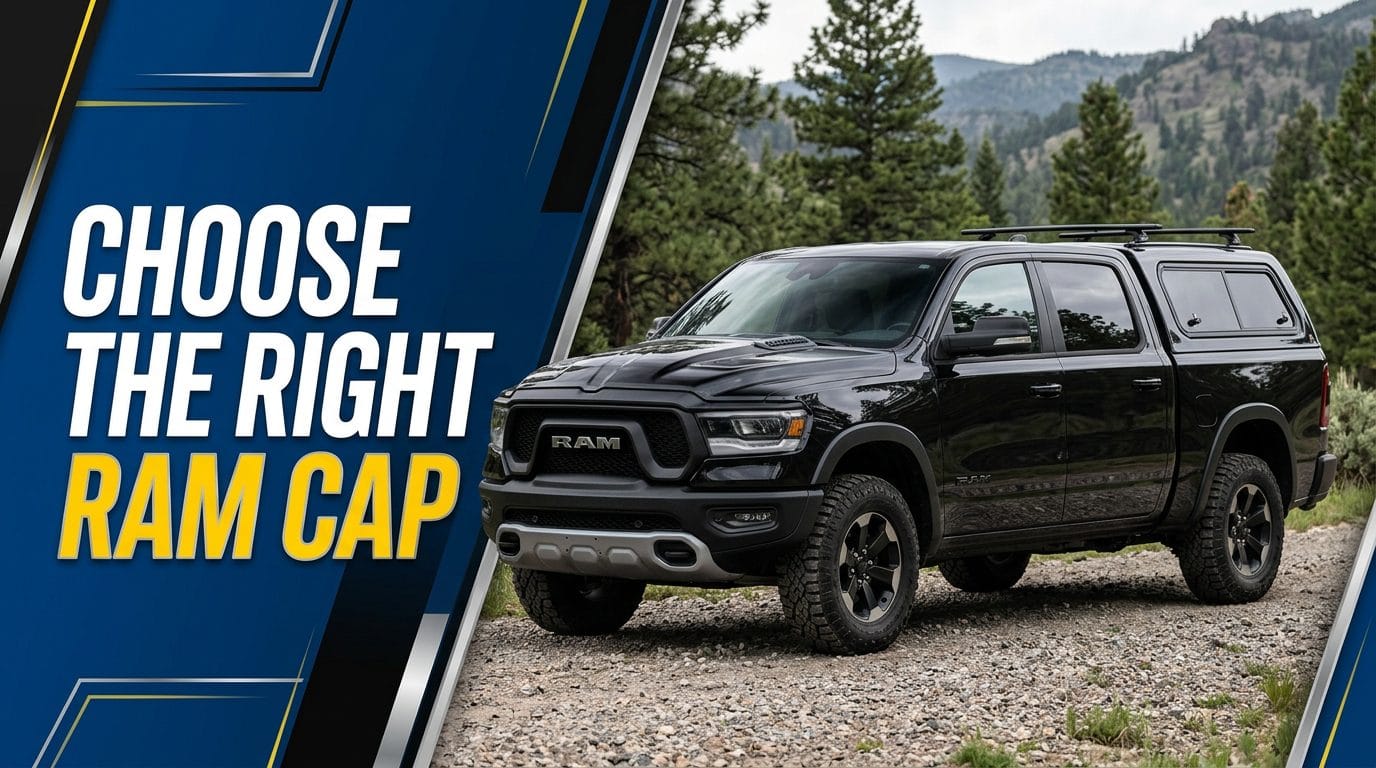
Looking for Ram caps that can protect your truck bed, keep equipment out of sight, and give you more room for work or weekend adventures? A good truck cap can change how you use your pickup. It can turn an open bed into an enclosed cargo area without requiring you to give up your truck’s everyday usefulness.
But choosing a cap isn’t as simple as picking a color or material. Ram 1500, 2500, and 3500 trucks have different bed configurations, and features such as RamBox can affect which products will fit. A topper made for a standard bed might not work on a truck with factory storage compartments.
This guide compares soft truck caps, aluminum camper shells, and other topper options. You’ll also learn which measurements matter, how installation works, and what to check before ordering. The goal is to help you choose a useful setup without spending money on the wrong fitment.
What Are Ram Truck Caps and Why Do Owners Use Them?
A truck bed cap, also called a truck topper or camper shell, is an enclosure installed over the pickup bed. Unlike a traditional tonneau cover, which sits relatively close to the bed rails, a cap creates additional enclosed space above the bed.
Some designs have fabric sides supported by a frame. Others use aluminum, fiberglass, or stainless steel construction with windows and access doors.
Ram owners consider caps for several practical reasons:
- Weather protection: An enclosed bed helps protect tools, luggage, camping equipment, and other cargo from rain, dust, and road debris.
- Additional storage: The enclosed space can make it easier to organize equipment and keep loose items together.
- Privacy: Solid-side versions help keep cargo out of public view.
- Camping: Some owners use a truck cap as the foundation for a simple sleeping or overlanding setup.
- Work use: Contractors and tradespeople may prefer an enclosed space for tools and jobsite equipment.
A truck cap isn’t automatically a theft-proof storage system or a completely waterproof enclosure. Locks, seals, installation quality, and the truck’s original bed construction all matter.
If you’re comparing different bed-protection options, our guide to Ram 1500 bed covers explains why a low-profile tonneau cover may be more practical for some owners.
Types of Ram Caps: Which Design Makes Sense?
Before looking at specific products, understand the main construction types. Each offers a different balance of weight, accessibility, durability, and price.
1. Soft Truck Caps
Soft caps use a fabric enclosure supported by a frame. Depending on the design, the sides can roll up or be removed to provide access to the truck bed.
They’re worth considering if you regularly switch between enclosed cargo storage and an open pickup bed. Some models also include integrated racks for carrying additional equipment.
Advantages:
- Often easier to remove than a conventional hard shell.
- Flexible access to the cargo area.
- Some designs require no drilling.
- Can offer useful rack options.
Limitations:
- Fabric needs regular cleaning and inspection.
- Soft panels provide less rigid physical security than a hard shell.
- Seams, zippers, and window panels need proper care.
2. Aluminum Truck Caps
Aluminum caps provide a rigid enclosure without using a traditional fiberglass shell. Depending on the design, they may include solid gullwing doors, sliding windows, locking hardware, and roof-rack mounting points.
This style can be especially useful for work trucks and owners who carry tools or equipment regularly.
Advantages: Rigid construction, side access, locking doors, and practical rack options.
Limitations: Higher purchase cost, more installation work, and additional weight compared with many soft designs.
3. Fiberglass Camper Shells
Fiberglass is a familiar choice for traditional pickup toppers. It provides a solid exterior and can be available with sliding side windows, interior lighting, carpeted headliners, and other options.
A properly matched fiberglass cap can create a clean, integrated appearance. However, these products are generally vehicle-specific, and their weight can make installation more demanding.
4. Stainless Steel and Heavy-Duty Caps
Heavy-duty stainless steel designs are aimed at owners who want a more rugged enclosed storage setup. Some models include gullwing doors, integrated roof rails, and multiple locking points.
They may make sense for demanding work or overlanding applications, but buyers should pay close attention to weight, load ratings, mounting systems, and total vehicle payload.
Ram Caps Compared: Real Products Worth Researching
The following examples illustrate different approaches to truck-bed protection. They are manufacturer or specialist-retailer products, not confirmed Amazon listings. Their listed specifications are useful starting points, but always confirm the exact model year, bed, and options before ordering.
Swipe or scroll horizontally on a phone to compare the options.
| Product | Best use | Main advantage | Important limitation | Research link |
|---|---|---|---|---|
| Bestop Supertop for Truck 2 | Flexible Ram 1500 storage | Removable fabric sides and no-drill mounting | Specific 5.7-ft bed application without RamBox | Manufacturer page |
| WildTop Soft Truck Cap | Travel, camping, and rack use | Multiple editions and integrated rack choices | Load capacity varies by edition | Manufacturer page |
| TKMAUTO Aluminum Camper Shell | Enclosed work-truck storage | Aluminum body and locking gullwing doors | Specific 2019–2026 Ram 1500 5.7-ft-bed version | Retailer page |
| FLATED AirTopper | Removable camping and cargo enclosure | Specific RamBox-compatible configurations | Straps may affect immediate access to RamBox compartments | Manufacturer fitment explanation |
| OVS Expedition Stainless Steel Cap | Heavy-duty Ram 2500/3500 applications | Gullwing doors and integrated roof rails | Specialized 6.4-ft bed application; confirm vehicle fitment | Retailer page |
Bestop Supertop for Truck 2: A Flexible Soft-Topper Option
Bestop’s Supertop for Truck 2 is a useful example of a soft truck-cap design. Its published application is for the 2019–2025 Ram 1500 with a 5.7-foot bed and without RamBox.
The manufacturer describes a laminated PVC-coated sailcloth, removable side panels, a removable tinted rear window, and a clamp-based mounting system. The system is designed to open and close from the side of the truck.
Why consider it: It makes sense for owners who want flexible access to the bed and don’t need a rigid fiberglass or metal enclosure.
Potential drawback: It isn’t a universal Ram topper. Its stated fitment excludes RamBox, and it doesn’t provide the same rigid storage enclosure as an aluminum cap. The third brake light is also listed as a separate part when required.
Bestop’s installation document recommends two people, about two hours, safety glasses, a 9/16-inch wrench, and a tape measure. The stated installation difficulty is moderate.
Product and fitment details: Bestop Supertop 77327.
For an Amazon search rather than an exact listing: Search Ram 1500 soft truck toppers on Amazon (paid link).
WildTop Soft Truck Cap: For Rack and Outdoor Use
WildTop offers different soft-cap editions for specific Ram bed configurations. Its product page includes a 2019-current Ram 1500 new-body-style 6.4-foot-bed version, with Scout, Nomad, and Beast editions.
The different editions have different construction and load specifications. For example, the manufacturer’s page lists a 770-pound static and 220-pound dynamic load rating for the Nomad, while the Beast is listed at 1,500 pounds static and 330 pounds dynamic. Both use a clamp-based, no-drill attachment approach.
Why consider it: Owners who want an enclosed bed with integrated rack options may find the different editions worth comparing.
Potential drawback: The load ratings aren’t interchangeable. Make sure you’re looking at the exact edition and understand whether a quoted figure is for a stationary or moving vehicle. These ratings are not a replacement for your truck’s payload rating.
Research the WildTop Ram 1500 6.4-foot-bed cap and select the exact vehicle configuration before ordering.
TKMAUTO Aluminum Camper Shell: For Enclosed Equipment Storage
TKMAUTO lists an aluminum camper shell for the 2019–2026 Ram 1500 with a 5.7-foot bed. Its solid-side version uses 6061-T6 aluminum and gullwing access doors.
The retailer lists six locking points and a bolt-on mounting system that uses factory bed rails without drilling. Its installation information calls for two people, basic hand tools, and approximately one to two hours.
The listing also gives roof load figures of 850 pounds static and 450 pounds dynamic. Those are product-specific figures, not permission to exceed the truck’s rated payload or other vehicle limits.
Why consider it: The aluminum construction and side-access doors may suit people who frequently retrieve tools or equipment from their bed.
Potential drawback: It’s a more involved investment than a soft topper. Check the warranty terms, shell weight, mounting hardware, and any rack equipment before deciding.
See the TKMAUTO aluminum Ram 1500 cap for its exact configuration.
For an Amazon search for comparable products: Search aluminum Ram 1500 bed caps (paid link).
FLATED AirTopper: An Option for Selected RamBox Setups
RamBox deserves special attention because the integrated storage compartments change the shape and width of the bed rails.
FLATED explains that its AirTopper uses four Ram configurations: CAP56 and MR56 for 5.7-foot beds, and CAP64 and MR64 for 6.4-foot beds. The MR versions sit higher than the standard cap design.
The manufacturer also explains an important compromise: when the topper is fully strapped down, the side compartments aren’t immediately accessible. Loosening the straps can provide access, but that may not be ideal if you open the boxes frequently.
Why consider it: This is worth investigating if you want a removable soft enclosure and your truck has RamBox.
Potential drawback: Don’t assume every AirTopper configuration has identical storage access or fitment. Confirm your exact bed size and understand the strap arrangement before purchasing.
Read FLATED’s RamBox fitment explanation before deciding.
OVS Expedition: A Heavy-Duty Ram 2500/3500 Example
Owners of Ram 2500 and Ram 3500 trucks may have different requirements from light-duty pickup owners. A work truck carrying tools or an overlanding build carrying equipment may benefit from a more rigid storage enclosure.
The OVS Expedition listing describes a stainless steel cap for selected Ram 2500/3500 6.4-foot-bed applications. Listed features include full-opening gullwing side doors, a five-piece modular design, roof rails, keyed locks, and a third brake light.
The retailer lists 750 pounds of static load capacity and 325 pounds of dynamic capacity. Check the manufacturer’s documentation to understand the loading conditions and any separate roof-rack limitations.
Potential drawback: This is a specialized, premium-priced product. The seller’s current vehicle selector should be checked before ordering; don’t assume that one 6.4-foot version fits every Ram 2500 or 3500.
See the OVS Expedition Ram 2500/3500 listing.
How to Check Ram Cap Fitment Before Ordering
Fitment is the most important part of buying a truck cap. Even a well-built product can become an expensive mistake if it doesn’t match your bed.
1. Confirm the Model Year and Truck Generation
Start with the exact year and model. A Ram 1500 isn’t automatically compatible with a Ram 2500 or Ram 3500 cap. Even within the same model name, different generations may use different bed and rail designs.
Don’t depend on a listing that simply says “fits Dodge Ram.” Look for the precise application and ask the seller to confirm any uncertain details in writing.
2. Measure the Bed Length
For reference, the official 2026 Ram 1500 specifications list these two common configurations:
- 5.7-foot bed: 67.4 inches in length.
- 6.4-foot bed: 76.3 inches in length.
These are the published dimensions for the specified 2026 Ram 1500 configurations, not a guarantee for every model year. Measure your own truck and compare the measurement with the manufacturer’s fitment sheet.
Check the distance between the bed rails, the front bulkhead, the tailgate area, and any trim that could interfere with mounting.
3. Check for RamBox Storage
If your truck has RamBox, make this one of your first questions to the manufacturer.
The storage compartments are integrated into the bed rails. A conventional topper’s mounting hardware may not work correctly with this configuration.
A RamForum discussion about fitting a topper over RamBox shows why owners need to consider rail width and clamp locations before attempting a non-standard installation. Don’t improvise mounting brackets on a shell that wasn’t designed for your setup.
4. Check the Tailgate and Bed Accessories
Look for factory bed rails, cargo management systems, a multifunction tailgate, bed liners, utility tracks, and other equipment. Ask whether the cap needs additional hardware or changes to existing accessories.
For more information on choosing compatible truck accessories, explore our Dodge Ram pickup accessories guide.
Installation, Maintenance, and Weather Protection
Installation requirements vary considerably. Some soft toppers use clamps and removable frames. Heavier metal and fiberglass shells may require more people, lifting assistance, and precise alignment.
Tools and Installation Preparation
Depending on the model, you may need:
- Socket and wrench sets.
- A tape measure.
- A torque wrench if specified by the manufacturer.
- Safety glasses and work gloves.
- Mounting clamps, brackets, and supplied seals.
- A second person to help position the cap.
Follow the supplied instructions, use the specified hardware, and tighten every mounting point according to the manufacturer’s directions. Never assume that an aftermarket shell is safe simply because it appears to sit evenly on the bed.
Preventing Leaks and Premature Wear
Check the front seal, side seals, tailgate seal, and door or window edges. After installation, inspect the enclosure during a controlled water test and look for moisture around the seams.
Soft toppers also need fabric and zipper maintenance. Clean the material according to the manufacturer’s instructions, keep zippers free of dirt, and inspect the frame and clamps periodically.
For hard caps, check door locks, hinges, gas struts, weather seals, and mounting hardware. Replace damaged seals before they allow water and dust to enter.
If you use your pickup for everyday driving, our Ram 1500 daily-driver accessories guide covers other upgrades that can make routine ownership easier.
Common Mistakes When Buying Ram Caps
Some buying mistakes are more expensive than the cap itself. Watch out for these problems:
- Buying by model name alone: Always check model year, generation, bed length, and truck series.
- Ignoring RamBox: A standard-bed cap may not fit a RamBox truck.
- Assuming every soft topper is waterproof: Seams, windows, and tailgate gaps still need attention.
- Ignoring rack load ratings: Static and dynamic ratings describe different loading conditions.
- Forgetting the third brake light: Check whether the cap includes one or requires a separate part.
- Overlooking installation weight: A heavy cap may need additional people or lifting equipment.
- Confusing a bed cap with a tonneau cover: Both protect cargo, but they offer different amounts of vertical storage and bed access.
- Trusting generic fitment claims: Ask for written confirmation when a listing doesn’t identify your configuration clearly.
Our Best RAM 1500 Accessories guide can also help you consider how a new bed enclosure fits into your wider truck upgrade plan.
Key Facts About Choosing Ram Caps
- Measure your actual bed rather than relying on the truck’s model name.
- Confirm RamBox compatibility before purchasing.
- Choose a soft topper for flexibility and a rigid shell when enclosed, lockable storage is the priority.
- Check roof load ratings separately for stationary and moving conditions.
- Confirm whether mounting hardware, weather seals, and third brake lights are included.
- Read the installation guide before committing to a DIY installation.
- Use an exact manufacturer fitment selector whenever possible.
Frequently Asked Questions About Ram Caps
1. What are the best Ram caps for a Ram 1500?
There isn’t one cap that is best for every Ram 1500. A soft topper may suit an owner who needs flexibility, while an aluminum or fiberglass shell may be better for enclosed equipment storage. Choose based on bed length, vehicle generation, RamBox configuration, and intended use.
2. Will a Ram 1500 truck cap fit a Ram 2500?
Not automatically. Even when the advertised bed lengths look similar, rail dimensions, body configurations, mounting points, and model generations can differ. Choose a cap specifically approved for your truck.
3. Can you install a truck cap on a RamBox bed?
Yes, some products are specifically designed for RamBox configurations. FLATED, for example, lists specific AirTopper options for 5.7-foot and 6.4-foot RamBox beds. A conventional cap should not be assumed to fit without manufacturer confirmation.
4. Are soft truck caps waterproof?
Some manufacturers describe their fabrics and seams as waterproof, but the complete installed enclosure still depends on seals, windows, zippers, mounting, and tailgate alignment. Inspect the product instructions and test the installation instead of assuming that no water can enter.
5. Are aluminum truck caps better than fiberglass?
They serve different priorities. Aluminum models can offer rigid construction, locking doors, and integrated rack options. Fiberglass shells may appeal to owners who prefer a traditional camper-shell appearance and available window or interior options. Compare actual weight, warranty, construction, and fitment rather than judging by material alone.
6. Can I install a Ram truck cap myself?
Some lighter clamp-on designs are suitable for DIY installation, but the manufacturer may still recommend two people. Heavy aluminum, stainless steel, and fiberglass shells may require additional lifting assistance. Follow the exact installation instructions for your product.
Final Recommendation: Which Ram Cap Should You Choose?
The right Ram cap depends on what you expect from your truck. Before comparing brands, decide whether you need flexible cargo access, a rigid work enclosure, rack capacity, or a removable camping setup.
- For flexible everyday use: Compare soft toppers such as the Bestop Supertop and WildTop options, paying close attention to their different vehicle applications.
- For RamBox owners: Investigate RamBox-specific options such as FLATED AirTopper configurations rather than adapting a standard cap.
- For enclosed tool storage: Consider a properly matched aluminum camper shell with locking side doors.
- For demanding Ram 2500/3500 applications: Research heavy-duty stainless steel options and verify their mounting and load specifications.
- For occasional cargo protection: A tonneau cover might be a more practical and affordable choice than a full-height cap.
One final recommendation: don’t place an order until the manufacturer or seller confirms your truck’s model year, bed length, bed style, and RamBox status. Those details matter more than a long feature list.
For additional ideas, visit RAM Care Pro and explore our truck accessory, maintenance, and repair guides.
A useful truck cap should solve a real storage problem, work with your exact Ram configuration, and remain practical long after installation. That’s a much better reason to choose an accessory than appearance alone.
External Research and Manufacturer References
- Official 2026 Ram 1500 specifications — bed configuration and dimensions.
- Bestop Supertop product specifications — product features and fitment.
- Bestop installation instructions — tools, installation requirements, and care.
- FLATED RamBox compatibility information — bed options and storage-access considerations.
- RamForum owner discussion — practical RamBox mounting concerns.
- FTC affiliate disclosure guidance — disclosure placement and transparency.
- Amazon Associates disclosure requirements — link-level disclosure and required Associate identification.






0 Comments