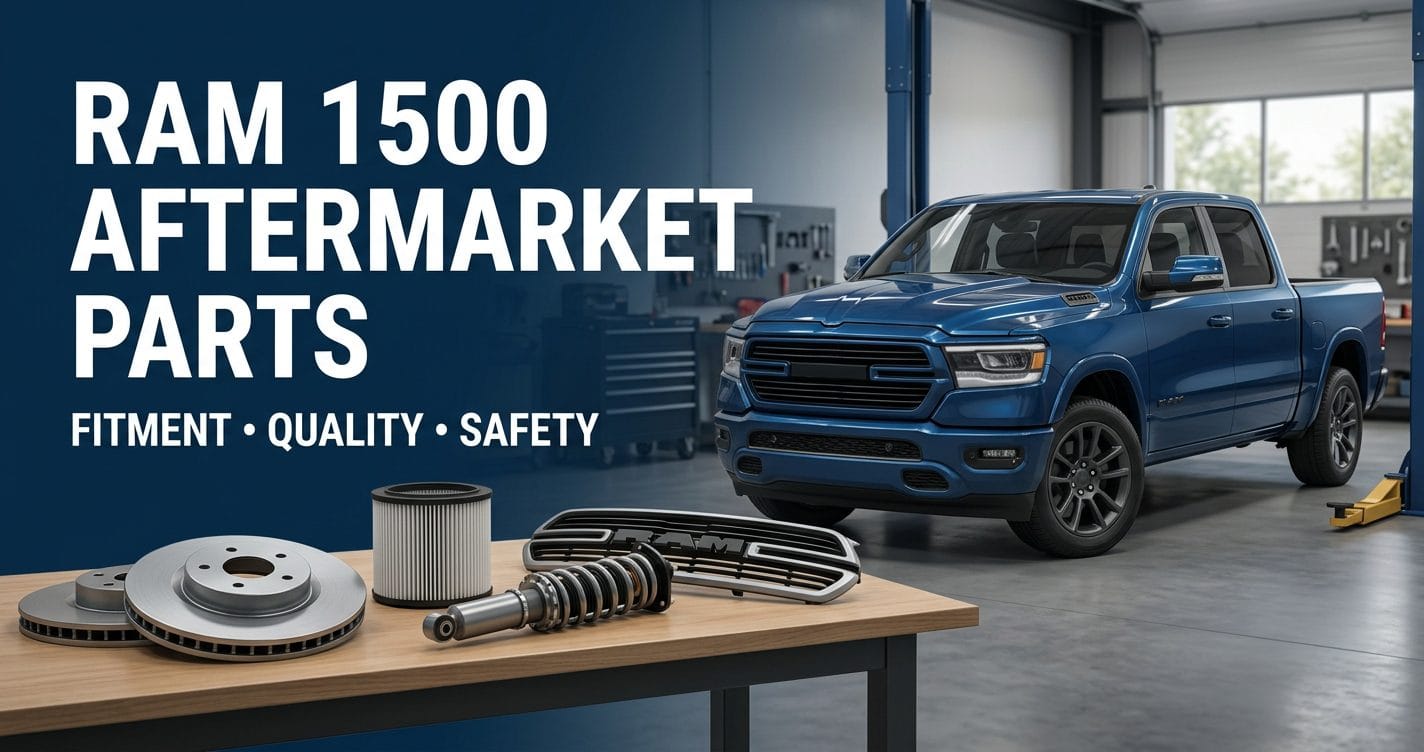
Aftermarket parts Ram 1500 owners use can help replace worn components, personalize a truck, or address specific maintenance needs. These parts are made by companies other than the vehicle’s original equipment manufacturer (OEM), and they range from basic replacement filters to suspension components, lighting upgrades, and exterior accessories.
However, not every part fits every Ram 1500, and a lower price doesn’t automatically mean better value. Model year, engine, trim, cab configuration, safety requirements, and installation quality can all affect the result. Understanding these differences helps you make informed decisions without compromising reliability.
Key Facts About Aftermarket Parts Ram 1500 Owners Should Know
- Aftermarket doesn’t automatically mean poor quality. Products vary by manufacturer, design, materials, and quality control.
- Fitment matters. A part designed for one Ram 1500 generation may not fit another.
- OEM and aftermarket are different categories. OEM parts follow the vehicle manufacturer’s original specifications, while aftermarket products come from independent manufacturers.
- Safety-related components need extra attention. Brakes, steering, suspension, lighting, and restraint systems should meet applicable requirements.
- Warranty terms vary. Read the vehicle warranty and the replacement part’s warranty before installation.
- Installation affects performance. Even a suitable component can cause problems when installed incorrectly.
- The lowest purchase price isn’t the whole cost. Labor, adjustments, maintenance, and replacement frequency can affect long-term value.
What Are Aftermarket Parts for a Ram 1500?
Aftermarket parts are replacement components or accessories produced outside the vehicle’s original equipment supply chain. Some are designed to match factory specifications, while others offer a different design, additional features, or a particular appearance.
For a Ram 1500, aftermarket options may include air filters, brake pads, shock absorbers, grille inserts, running boards, bed covers, floor liners, mirrors, and lighting components. Certain products are intended to replace a failed factory part. Others modify how the truck looks or functions.
It’s important to distinguish a replacement part from a performance modification. A replacement radiator, for example, is intended to restore cooling-system function. An aftermarket suspension kit may change ride height, handling characteristics, and the way the truck responds under load.
The term “aftermarket” doesn’t tell you whether a component is dependable, compatible, or suitable for your needs. Those questions must be answered by examining the specific product and its documentation.
Why Ram 1500 Owners Consider Aftermarket Parts
Owners consider aftermarket components for several reasons. The original part might be worn out, unavailable locally, expensive to replace, or unsuitable for a particular use. A truck used for commuting may have different needs from one that regularly carries tools, travels on rough roads, or tows a trailer.
Availability is another consideration. Independent manufacturers offer a wide range of designs, and some specialize in particular components or applications. That variety can make it easier to find a part that suits a specific repair or customization goal.
Still, an upgrade should solve a defined problem. A more aggressive-looking suspension setup won’t automatically improve towing performance, and brighter-looking headlights aren’t necessarily safer if their beam pattern is unsuitable for the housing.
Before choosing a part, identify what you want to achieve. Restoring normal operation, reducing wear, improving convenience, and changing appearance are different goals that require different decisions.
OEM vs. Aftermarket vs. Used Ram 1500 Parts
The best option depends on the component, vehicle condition, available documentation, and your priorities. No category is automatically the right choice for every repair.
| Part type | Potential advantages | What to check |
|---|---|---|
| OEM | Designed for the manufacturer’s specified application | Correct part number, availability, and price |
| Aftermarket | More design choices and potentially competitive pricing | Fitment, quality documentation, warranty, and standards |
| Used original part | May cost less than a new replacement | Wear, damage, history, and remaining service life |
| Remanufactured part | Previously used component rebuilt to a defined process | Rebuilding standards, included parts, and warranty coverage |
OEM parts are often a sensible starting point when factory fit and original specifications are priorities. The official Mopar Ram 1500 parts catalog lets owners browse categories by vehicle year.
Aftermarket parts can be suitable when the manufacturer clearly identifies the application and provides useful technical information. Used parts may be reasonable for some non-safety-critical repairs, but their condition and history can be difficult to establish.
Remanufactured parts deserve their own evaluation. The term generally means a used component has been rebuilt, but the exact process varies by part and supplier. Ask what was replaced, what was inspected, and what the warranty covers.
Which Aftermarket Parts Can You Use on a Ram 1500?
Compatibility depends on the individual component. The following categories illustrate what to consider before selecting a replacement or upgrade.
Filters and routine maintenance parts
Air filters, cabin filters, oil filters, and other service components are common aftermarket options. Confirm the engine or vehicle application, dimensions, connection points, and specified service requirements.
A filter that appears similar to the original may still have different sealing or flow characteristics. Use the vehicle’s maintenance information and the part manufacturer’s application guide rather than relying on appearance alone.
Brakes, steering, and suspension
Brake pads, rotors, steering components, shocks, and suspension kits deserve closer scrutiny because they affect vehicle control, ride, and braking behavior.
Check the exact application and the manufacturer’s technical documentation. If a component changes ride height or suspension geometry, consider whether additional adjustments or inspections are required. Seek a qualified technician when the work affects braking or steering safety.
Exterior and interior accessories
Bed covers, floor liners, grille components, running boards, and seat covers may be easier to evaluate than major mechanical upgrades, but fitment remains important.
Measure or verify the relevant mounting points, bed configuration, cab style, and trim. For accessories installed near airbags or other safety equipment, confirm that the design won’t interfere with normal operation.
Electrical and lighting components
Replacement bulbs, wiring accessories, sensors, and lighting assemblies can vary substantially. Verify connectors, electrical specifications, installation instructions, and applicable lighting requirements.
Don’t assume a bulb fits correctly or produces a safe beam simply because it can be physically installed. Changes to electrical systems can also affect diagnostic functions or create warning lights.
How to Check Compatibility Before Buying
The most useful first step is to identify your exact truck. A model name alone may not provide enough information to establish fitment.
- Confirm the model year. Don’t assume a part fits every Ram 1500 generation.
- Identify the engine and trim. Some components differ across engine options and equipment packages.
- Check the cab and bed configuration. This matters especially for bed covers, liners, running boards, and exterior accessories.
- Compare part numbers. If replacing an existing component, use its part number as a reference and confirm any superseding numbers with the manufacturer.
- Read the application notes. Look for exclusions involving production dates, drivetrain, brake packages, or factory options.
- Check installation requirements. Determine whether special tools, programming, calibration, or professional installation are needed.
- Ask for written confirmation when uncertain. Provide the vehicle identification number (VIN) to a qualified parts supplier when appropriate.
The VIN can help a supplier identify the truck’s configuration, but it doesn’t guarantee that every catalog listing is correct. Confirm the final application and return policy before opening packaging or modifying a part.
For factory-reference information, start with the official Ram 1500 parts catalog and the owner’s manual for your specific vehicle.
Quality, Safety, and Warranty Considerations
Product quality is more than a brand name or a polished product page. Look for clear manufacturer identification, installation instructions, traceable part numbers, material specifications where relevant, and a warranty that explains what is covered.
Be especially cautious with parts that have little technical documentation, unclear fitment claims, inconsistent labeling, or no practical way to contact the manufacturer. Reviews can help identify questions to investigate, but they shouldn’t replace technical evidence.
Safety requirements also matter. The National Highway Traffic Safety Administration (NHTSA) explains federal vehicle-safety responsibilities and provides safety information. Certain equipment, including specified lighting and brake-related components, is subject to applicable federal requirements.
Vehicle modifications can have legal and safety implications. NHTSA has also discussed restrictions on businesses knowingly making required safety equipment inoperative. Check the relevant rules before changing components that affect required safety systems, and consult a qualified professional when needed.
Warranty questions require similar care. Don’t assume every aftermarket installation automatically voids an entire vehicle warranty, or that every repair will remain covered. Coverage depends on the warranty terms and circumstances. Review your warranty documentation and ask the dealer or warranty provider how a proposed modification may affect a particular claim.
Common Mistakes to Avoid With Ram 1500 Replacement Parts
One frequent mistake is choosing a part based on the vehicle name alone. Two trucks with the same badge may have different engines, equipment packages, mounting arrangements, or production details. Verify the actual application instead of trusting a broad title.
Another mistake is judging quality by price alone. A cheap component may be perfectly adequate for some applications, while a more expensive part may offer documentation or features that matter for others. Compare specifications, warranty terms, and installation needs rather than assuming cost proves quality.
Some owners also overlook the full installation cost. A component may require additional hardware, alignment, programming, or professional labor. A low-priced part that needs repeated adjustment or replacement may not be the best overall value.
Finally, avoid mixing incompatible components. A suspension modification, wheel change, or electrical upgrade may affect other systems. Review the complete installation requirements before making a change, and don’t ignore new warning lights, unusual noises, leaks, or changes in handling after installation.
A Practical Checklist Before Installing Aftermarket Parts
Before ordering or installing a component, work through this checklist:
- Confirm the year, engine, trim, and relevant vehicle configuration.
- Verify the part number and the manufacturer’s fitment guide.
- Read installation instructions and determine whether professional help is needed.
- Review warranty terms, return conditions, and included hardware.
- Check applicable safety requirements for regulated components.
- Keep receipts, packaging details, and installation records.
- Inspect the installation and follow any specified torque, calibration, or maintenance instructions.
- Stop driving and seek professional inspection if the repair causes a serious braking, steering, or other safety concern.
This process doesn’t eliminate every risk, but it helps you make a decision based on compatibility and evidence rather than marketing claims.
What Ram 1500 Owners Should Remember
Aftermarket parts can provide useful options for maintaining or modifying a Ram 1500, but the right choice depends on the job. Routine maintenance items, appearance accessories, and safety-critical mechanical components don’t all require the same level of evaluation.
Start with the truck’s exact specifications, compare documented products, and account for installation and long-term maintenance. Use OEM parts when they best meet your requirements, and consider aftermarket alternatives when their fitment, quality, and purpose are clearly established.
The key takeaway: Choose the part that is verified for your specific Ram 1500 and suitable for its intended use—not simply the cheapest option or the one with the most persuasive advertisement.






0 Comments