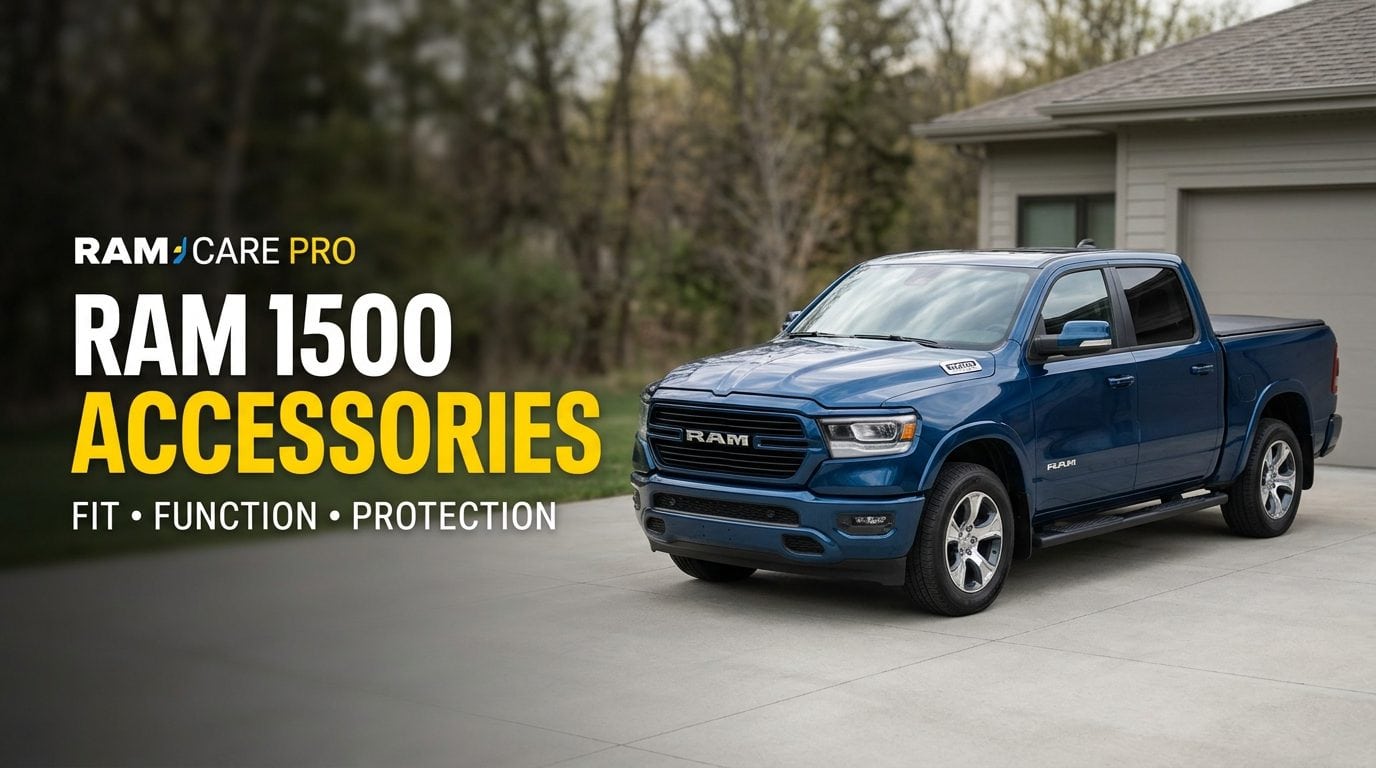
Accessories for Dodge Ram 1500 trucks can make everyday driving more comfortable, protect the interior and bed, improve cargo organization, and help owners get more use out of their pickups. But adding equipment just because it looks good isn’t always the smartest approach. The right upgrades depend on how you use your truck, which model year you own, and whether the accessory actually fits your configuration.
A Ram 1500 used for commuting needs a different setup from one used for construction work, towing, camping, or off-road driving. Before spending money, it’s worth understanding the main accessory categories, their practical benefits, and the fitment details that can make the difference between a useful upgrade and an expensive mistake.
Key Facts About Ram 1500 Accessories
- Fitment comes first: Model year, cab style, bed length, trim, and factory equipment can change compatibility.
- Interior protection matters: Well-fitting floor liners help contain mud, water, and everyday dirt.
- Bed accessories serve different purposes: A tonneau cover, bed mat, and bedliner aren’t interchangeable.
- Running boards improve access: Choose their length and design based on passengers, ground clearance, and how you use the truck.
- Electrical upgrades need care: Lighting and powered accessories should be installed with the correct wiring and protection.
- Extra equipment adds weight: Accessories count toward the truck’s available payload.
- OEM and aftermarket aren’t identical: Compare fitment, installation requirements, materials, and support before choosing.
What Do Accessories for Dodge Ram 1500 Actually Do?
Truck accessories are additional components or equipment that change how a pickup looks, protects itself, carries cargo, or functions during everyday use. Some are simple additions, such as floor liners and storage organizers. Others involve more complicated installations, including suspension upgrades, auxiliary lighting, and electrical equipment.
For a Ram 1500 owner, the main purpose should be solving a real problem. If muddy boots regularly damage the carpet, interior floor protection makes sense. If tools and groceries move around in the bed, cargo organizers or a suitable bed cover may be more useful than an exterior styling modification.
Accessories generally fall into several groups: interior protection, bed and cargo equipment, exterior protection, entry assistance, towing equipment, lighting, and appearance upgrades. Mopar’s official Ram accessory catalog also separates its offerings into categories such as bed products, floor mats, cargo management, lighting, side steps, trailering, and storage.
That range is why it helps to think about your driving habits before building an accessory list. You can also explore our guide to Dodge Ram pickup accessories and their practical uses for a broader look at different truck setups.
Which Ram 1500 Accessories Are Most Useful?
1. Tonneau covers for bed protection
A tonneau cover closes off the top of the truck bed. Depending on its design, it can help protect cargo from rain, dust, and direct exposure while making loose items less visible from outside the truck.
Common styles include soft roll-up, soft folding, hard folding, and retractable covers. A soft roll-up design can be convenient when you frequently load and unload cargo. A hard folding cover offers rigid panels, while retractable designs slide toward the cab and can leave different amounts of bed space available when open.
No cover should automatically be treated as completely waterproof or theft-proof. Seals, installation quality, tailgate design, and the cover’s locking arrangement all affect real-world protection. A cover is also not a substitute for properly securing cargo.
Before choosing one, confirm the bed length and check for RamBox storage, utility rails, and the Multifunction Tailgate. Our guides to the Ram 1500 bed cover fitment questions and different tonneau cover styles for Ram 1500 explain why these details deserve attention.
2. All-weather floor liners
Floor liners are among the more practical additions for trucks that see regular use. Mud, wet shoes, spilled drinks, sand, and road salt can gradually wear down the original carpet. A properly shaped liner creates a removable barrier that is easier to clean.
There is a difference between a basic flat floor mat and a molded liner with raised edges. A molded design may contain more dirt and liquid, but the fit matters just as much as the material. A liner that curls, slides, or interferes with the pedals creates a safety problem rather than solving one.
Check whether the set is made for your exact cab and seating arrangement. Rear floor shapes and storage configurations can differ. The official Mopar catalog, for example, identifies separate all-weather mat applications for 2026 Ram 1500 Rebel Quad Cab and Crew Cab models.
3. Running boards and side steps
Running boards make it easier to climb into and out of a truck, especially for children, older passengers, and anyone who finds a taller cab difficult to enter. They can also provide a convenient step when accessing roof-mounted equipment or reaching items near the side of the bed.
Traditional tubular side steps have a narrower stepping area. Full-width running boards generally provide more room for a foot. Power-deployable boards retract when the doors close, but their motors and electrical connections create additional components that may need attention.
Consider ground clearance before choosing an off-road setup. A step mounted below the body can become an obstacle over rocks or uneven trails. Also check cab length. Mopar’s catalog lists different side-step applications for Quad Cab and Crew Cab trucks, with some wheel-to-wheel versions tied to particular bed combinations.
4. Bed mats, bedliners, and cargo organizers
A bed mat is a removable protective layer placed over the bed floor. It can help reduce scratches and dents from tools, storage containers, and other cargo. A bedliner provides broader surface protection, with drop-in and spray-in designs serving different installation and maintenance needs.
These options aren’t identical. A removable rubber mat is relatively easy to lift out for cleaning. A drop-in liner covers more of the bed surface but has to fit around the truck’s specific bed details. A spray-in liner creates a coating on the prepared surface and requires professional-quality application for a consistent result.
Cargo nets, dividers, tie-down accessories, and bed storage systems address another issue: keeping equipment from shifting during travel. They can be helpful for work gear, camping equipment, and everyday hauling. However, cargo still needs to be secured according to its size, weight, and shape.
5. Exterior protection and appearance upgrades
Mud flaps, splash guards, hood deflectors, grille accessories, and door-edge protection can help protect selected exterior areas from road debris and everyday wear. Their usefulness depends on the driving environment and the part being protected.
Appearance changes such as grille inserts, mirror covers, wheel upgrades, and exterior trim can personalize the truck. Before installation, check that a part doesn’t block a camera, parking sensor, light, or other factory feature. A modification that looks clean in a photograph may create a problem if it interferes with equipment already fitted to the vehicle.
6. Towing and lighting accessories
Owners who tow may need equipment such as a suitable hitch accessory, trailer wiring components, a brake controller where applicable, or towing mirrors. The right setup depends on the truck’s factory towing equipment and the trailer being used.
Additional lighting can be useful for work areas or off-road driving. However, auxiliary lights need a suitable mounting position, secure wiring, and correct switching. They should also be used in accordance with applicable road-lighting laws. Avoid installations that create glare for other drivers or interfere with the vehicle’s original lighting.
OEM vs. Aftermarket vs. Universal Accessories
One of the first decisions is whether to choose a factory-style accessory, an aftermarket component designed for a Ram, or a universal product. There isn’t one automatic winner. Each option has trade-offs involving fitment, choice, installation, and support.
| Accessory type | Main advantage | What to check | Best suited for |
|---|---|---|---|
| OEM / Mopar | Designed around specified vehicle applications | Exact part number, year, trim, cab, and bed | Owners prioritizing factory-oriented fitment |
| Ram-specific aftermarket | More choices in styles, materials, and designs | Verified compatibility, installation instructions, warranty terms | Owners looking for a particular feature or appearance |
| Universal | Can work across different vehicle applications | Measurements, mounting points, clearance, and modification needs | Simple equipment where universal fit is genuinely appropriate |
| Used accessories | May cost less than buying new | Wear, missing hardware, damage, and original application | Owners who can inspect the item and verify its part number |
OEM parts are not automatically the best choice for every situation, and an aftermarket part isn’t automatically a poor one. Mopar explains that its genuine accessories are developed around manufacturer specifications and testing standards. Aftermarket manufacturers may offer more variations or specialized designs, but the buyer needs to check the actual fitment documentation.
Universal accessories deserve the most careful measuring. A product advertised for many pickups may still require different mounting hardware or may not sit correctly around a Ram’s factory equipment. Don’t assume that a similar-looking truck has identical mounting points.
Why Model Year, Cab Style, and Bed Length Matter
One of the easiest ways to make an accessory mistake is to search only for “Ram 1500” and assume the first result will fit. The Ram 1500 has been sold in different generations, trims, cab configurations, and bed lengths. Equipment packages can also change the mounting space available for an accessory.
Start with the model year. A component listed for one generation may not match a redesigned truck, even if both vehicles carry the Ram 1500 name. Check the cab style next. Floor liners, running boards, seat covers, and interior organizers can have separate applications for different cab layouts.
Bed length is especially important for tonneau covers, bed mats, and bedliners. RamBox cargo storage and the Multifunction Tailgate can introduce further fitment restrictions. Utility rails and other factory bed equipment may affect where a cover or rack can mount.
Trim matters, too. Bumper shape, grille design, factory lighting, sensors, and installed packages can change what an exterior accessory needs to accommodate. A part that fits a Tradesman may not fit a Rebel or another trim without a different application.
For more reliable identification, use the manufacturer’s fitment lookup, compare the actual part number, and provide the truck’s VIN when the catalog supports it. Mopar’s parts-shopping guidance specifically recommends entering the vehicle year, make, model, and trim, with a VIN available for more precise results.
Can Accessories Affect Payload, Towing, and Safety?
Yes. Even accessories that don’t change the engine or suspension can affect how much weight the truck can carry. A heavy bed cover, toolbox, rack, bumper component, or other permanent equipment becomes part of the vehicle’s overall load.
For context, Ram lists a maximum payload capacity of 2,360 pounds for the 2026 Ram 1500 when properly equipped. That is a maximum figure for qualifying configurations, not a rating that applies to every 2026 truck. Your particular truck’s certification label and owner documentation are what matter when checking its actual limits.
Payload and towing capacity are not interchangeable. A truck that has a high advertised towing figure does not automatically have the same amount of capacity available for passengers, cargo, and added equipment. Trailer tongue weight also uses part of the truck’s payload capacity.
Suspension changes, larger tires, and wheel changes deserve extra attention. They can affect handling, ride height, steering behavior, braking performance, or clearance. Don’t assume that a leveling kit or lift automatically increases the truck’s legal or manufacturer-rated load capacity.
Powered accessories bring another safety consideration. Auxiliary lights, cameras, compressors, and other electrical equipment need suitable fusing, wiring, grounding, and mounting. Poorly routed wires can be damaged by heat, water, or moving parts. For complicated electrical installations, use a qualified installer familiar with the truck’s systems.
How to Choose the Right Accessories for Your Truck
Start by listing the tasks your Ram performs most often. Think about what bothers you during a normal week. Does cargo get wet? Is the bed difficult to organize? Do passengers struggle to enter? Is mud damaging the carpet? A clear problem makes it easier to evaluate whether an accessory is actually useful.
Next, separate essential protection from optional personalization. Floor liners, a bed mat, or appropriate cargo equipment may offer more everyday value than a cosmetic modification. An owner who regularly carries tools may prioritize bed storage, while someone who uses the truck mainly for commuting may care more about interior protection and convenience.
Before placing an order, work through this checklist:
- Confirm the exact model year and trim.
- Identify Quad Cab or Crew Cab where applicable.
- Measure or verify the bed length.
- Check for RamBox, utility rails, and the Multifunction Tailgate.
- Confirm whether the truck has factory sensors, cameras, or towing equipment that could affect installation.
- Read the product’s installation instructions and compatibility notes.
- Check what hardware is included and whether extra parts are required.
- Review warranty, return, and support conditions.
- Consider added weight and maintenance requirements.
It’s also sensible to compare the total installation cost rather than looking only at the listed accessory price. A basic bolt-on item may be manageable at home if the instructions and tools are appropriate. A powered running board, suspension component, or complex lighting setup may require professional installation.
For more ideas based on everyday ownership, see our guide to Dodge Ram 1500 accessories for daily driving and our overview of useful Ram 1500 accessory categories.
Installation and Maintenance Mistakes to Avoid
Buying the correct accessory is only half the job. Installation quality and routine inspection determine whether it stays useful over time. Follow the manufacturer’s instructions instead of relying on a video for a similar-looking truck. Small differences in model year or factory equipment can change the procedure.
Don’t force a part into place when the holes or brackets don’t line up. That can damage mounting points, create uneven pressure, or leave the accessory loose. Stop and recheck the part number, vehicle configuration, and required hardware before drilling, cutting, or modifying anything.
After installation, check that bolts and clamps are secure according to the manufacturer’s instructions. Inspect the equipment periodically, especially after rough-road driving, heavy hauling, or exposure to road salt. Look for loose fasteners, cracked mounts, corrosion, damaged seals, and worn step pads.
Keep tonneau cover drainage paths and seals clear of leaves and dirt. Clean removable floor liners before buildup becomes difficult to remove. Check that bed mats haven’t trapped moisture or debris underneath them. Electrical accessories should be inspected for loose connections, damaged insulation, and signs of overheating.
Another common mistake is treating owner reviews as guaranteed fitment evidence. Forums can help identify recurring questions, but one owner’s successful installation doesn’t prove that the same part fits every truck. Use those discussions as a starting point, then confirm the details with the manufacturer or parts supplier.
Good maintenance also means removing an accessory when it is damaged or no longer secure. A loose step, poorly attached rack, or unsecured cargo organizer can become a hazard. Repair or replace damaged equipment before continuing to use it.
Frequently Asked Questions
What accessories should I get first for a Dodge Ram 1500?
Start with accessories that solve problems you experience regularly. All-weather floor liners, a bed mat, a suitable tonneau cover, or cargo organization equipment are practical starting points. The best first upgrade depends on how you use the truck.
Do accessories from one Ram 1500 year fit another year?
Some accessories fit multiple model years, but compatibility should never be assumed. Body changes, generations, cab styles, bed lengths, and factory options can affect fitment. Verify the application and part number before ordering.
Are OEM accessories better than aftermarket accessories?
OEM accessories are designed around specified factory vehicle applications. Aftermarket accessories can offer additional styles and features. Compare verified fitment, materials, installation requirements, warranty coverage, and support rather than choosing based on the label alone.
Does a tonneau cover fit every Ram 1500 bed?
No. Tonneau covers are designed for particular bed lengths and configurations. RamBox storage, utility rails, and the Multifunction Tailgate can also affect compatibility. Check the full vehicle application before buying.
Can I install Ram 1500 accessories myself?
Some simple accessories can be installed at home when the manufacturer provides suitable instructions and hardware. Electrical equipment, suspension changes, and more involved modifications may require professional help. Never improvise mounting or wiring when the instructions don’t support it.
Conclusion: Choose Accessories That Fit Your Ram 1500
The most useful accessories for Dodge Ram 1500 trucks are the ones that solve real ownership problems without creating new fitment, safety, or maintenance issues. Start with your truck’s year, cab, bed, trim, and factory options. Then choose upgrades that match how you actually drive, haul, and use the pickup. A carefully selected setup will serve you better than a long list of modifications that don’t suit your needs.
Official Resources for Further Checking
- Official Mopar Ram 1500 accessory catalog – review factory accessory categories and listed applications.
- Mopar vehicle and VIN fitment lookup – use vehicle details to check compatible parts.
- Official 2026 Ram 1500 FAQ – review current model information, payload details, and bed dimensions.






0 Comments