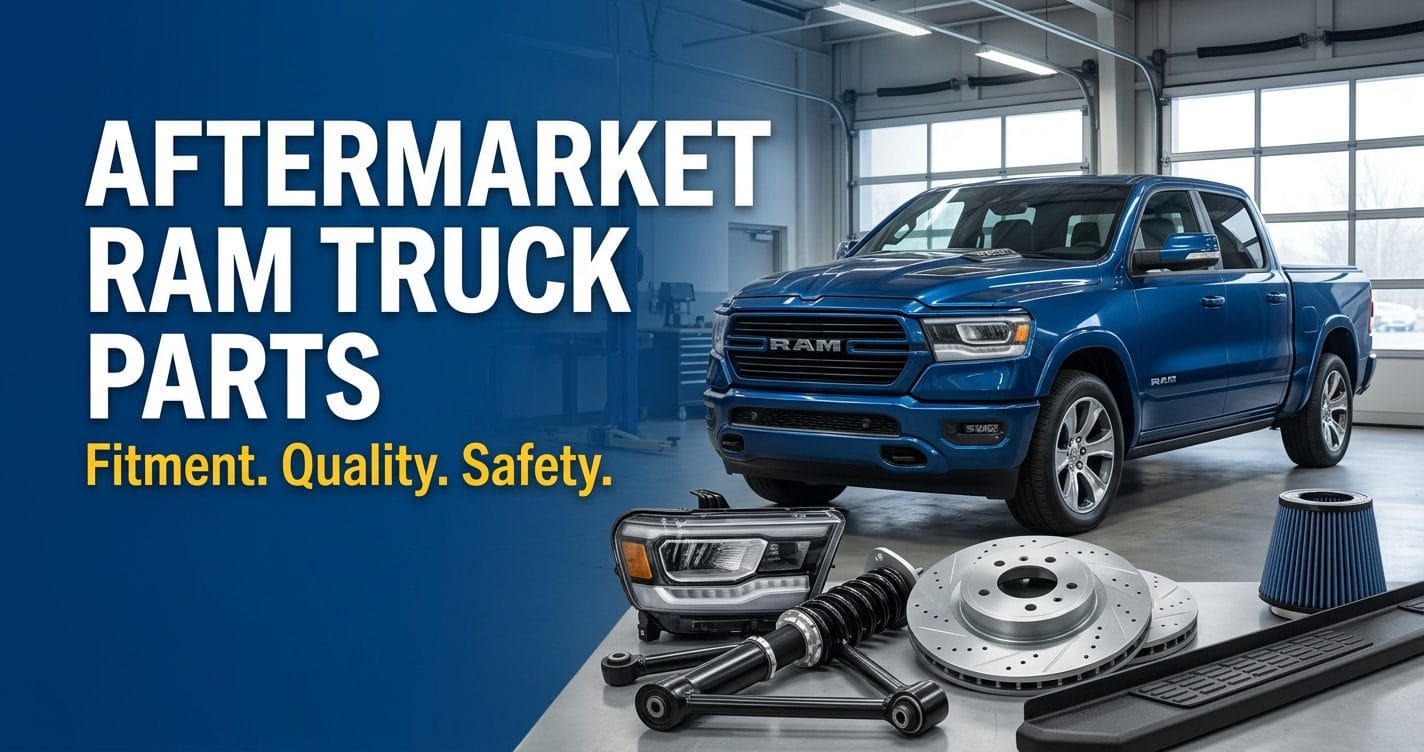
Aftermarket Ram truck parts give truck owners more choices when replacing worn components, fixing problems, or customizing their vehicles. These parts are made by companies other than the original vehicle manufacturer and range from basic replacement filters to suspension components, lighting, running boards, and performance upgrades.
The extra choice can be useful, but it also creates questions. Will the part fit your particular Ram? Is the quality dependable? Could the installation affect another vehicle system or complicate a warranty claim?
Understanding these details helps you choose parts based on compatibility, function, safety, and long-term value rather than price alone.
Key Facts at a Glance
- Aftermarket parts are manufactured by companies other than the original vehicle manufacturer.
- Quality, fit, materials, and warranty coverage vary between brands and products.
- A part advertised for a Ram 1500 may not fit every model year, trim, engine, or configuration.
- OEM parts and aftermarket parts can both be suitable, depending on the application.
- Electronic, braking, steering, and suspension modifications require extra attention to compatibility and safety.
- Using an aftermarket part does not automatically void a vehicle warranty, but damage caused by a modification may affect a related claim.
- Checking the VIN, manufacturer fitment information, installation requirements, and return policy can prevent expensive mistakes.
What Are Aftermarket Ram Truck Parts?
Aftermarket Ram truck parts are replacement components or accessories produced by third-party manufacturers rather than supplied as genuine original-equipment parts by Ram’s official parts provider.
They cover a broad range of applications. Some replace worn factory components, while others add features or change the truck’s appearance, handling, or functionality.
For example, a Ram owner might choose aftermarket brake components for a repair, a replacement headlight assembly after damage, or running boards to make getting into the cab easier. Another owner might install a bed cover, upgraded shocks, or an accessory designed for off-road use.
These are different jobs, so they should not all be evaluated using the same criteria.
A replacement component needs to perform its intended function reliably. A cosmetic accessory needs appropriate fit and finish. A suspension or performance modification must also be assessed for its effect on the truck’s other systems.
Aftermarket does not automatically mean low quality
The aftermarket includes a wide range of manufacturers, materials, engineering standards, and price points. Some companies specialize in vehicle-specific replacement parts, while others focus on specialized accessories or performance applications.
That variety is one reason a low price alone cannot tell you whether a part is a good choice.
Likewise, a high price does not automatically prove superior quality. Check the manufacturer’s technical information, application-specific fitment details, warranty terms, and available installation instructions.
For an explanation of factory parts and their intended applications, see the official Mopar parts and accessories catalog.
Why Ram Owners Consider Aftermarket Parts
The main reason is flexibility. Owners can compare different designs, features, materials, and price points instead of relying on one parts catalog.
A truck used for commuting may need replacement lighting or interior protection. A work truck may benefit from durable steps, cargo management equipment, or a bed accessory. An off-road vehicle may need components specifically engineered for its terrain and intended use.
Aftermarket options can also be useful when a factory component is expensive, difficult to source, or no longer available. However, availability alone is not enough: the replacement still needs to match the truck’s requirements.
For owners exploring functional additions, the RAM Care Pro guide to Dodge Ram pickup accessories covers common accessory categories and explains why the right choice depends on how the truck is used.
Replacement parts versus upgrades
It helps to separate two common purposes.
Replacement parts restore a function that has deteriorated or failed. Examples include filters, belts, sensors, brake components, and certain suspension parts.
Upgrade parts change or add something to the vehicle. Examples include running boards, bed covers, auxiliary lighting, and some performance components.
The distinction matters because an upgrade can introduce compatibility requirements that were not present with the original configuration. A new lighting assembly, for example, may require compatible connectors, wiring, control modules, or adjustments that a straightforward replacement does not.
Before choosing a part, identify whether the goal is to restore the original function or deliberately change how the truck works.
OEM vs. Aftermarket vs. Used Ram Parts
OEM, aftermarket, and used parts each have different advantages and limitations. The best option depends on the component, its condition, the truck’s configuration, and the consequences of a failure.
| Factor | OEM parts | Aftermarket parts | Used parts |
|---|---|---|---|
| Manufacturer | Original-equipment parts provider | Third-party manufacturer | Previously installed component |
| Fitment | Designed for specified applications | Varies by brand and product | Depends on donor vehicle and part condition |
| Choice | Factory-specification options | Often a wider range of designs and features | Depends on available inventory |
| Condition | Usually new when sold as new | Usually new when sold as new | May show wear or hidden damage |
| Warranty | Coverage depends on the part and terms | Coverage depends on the manufacturer and seller | Often limited or unavailable |
| Main concern | Cost and availability | Quality and exact compatibility | Wear, history, and fitment |
OEM parts can be useful when factory specifications and integration are priorities. Aftermarket parts offer more variety, but the quality and application information need to be evaluated individually.
Used parts can make sense for certain non-critical components or discontinued trim pieces. However, the original part number, condition, damage history, and compatibility still matter. A used component is not automatically a better value just because it costs less.
For a replacement that affects braking, steering, restraint systems, or another safety-critical function, prioritize documented suitability and condition over a bargain price.
How to Check Compatibility Before Ordering
Fitment is one of the most important considerations when buying aftermarket Ram truck parts.
The Ram name alone does not identify every detail of a vehicle’s configuration. Model years, engine options, trim levels, cab styles, bed lengths, drivetrain configurations, and factory-installed equipment can affect which parts fit.
Two trucks that look nearly identical from the outside may require different components.
Start with your VIN and original part number
Your vehicle identification number (VIN) helps a parts supplier identify the truck’s specific configuration. The original part number can provide another useful reference when replacing an existing component.
Use these details alongside the aftermarket manufacturer’s fitment catalog. Do not assume that entering a model name into a shopping website is sufficient confirmation.
For a Ram 1500, check the model year and the exact version of the truck. Depending on the component, engine, trim, cab configuration, drivetrain, and factory options may also matter.
Check connectors, dimensions, and mounting points
Physical dimensions are only part of compatibility.
Before ordering, look for differences in:
- Electrical connectors, wiring requirements, and control-module compatibility.
- Bolt patterns, mounting brackets, and fastener locations.
- Clearance around suspension, wheels, tires, and body panels.
- Required adapters, additional hardware, or programming.
- Installation instructions and any special tools needed.
Lighting is a useful example. A replacement headlight may appear to have the right shape but still use different connectors or require additional components. A suspension part may bolt into place yet have application restrictions that make it unsuitable for a particular configuration.
If the manufacturer cannot confirm the fitment, ask for clarification before buying.
Which Parts Need Extra Attention?
Not every aftermarket component carries the same level of risk. A cosmetic trim piece and a steering component should never be evaluated as if a failure would have the same consequences.
Brakes, steering, and suspension
These systems directly affect vehicle control. Choose components with clear application information, appropriate technical documentation, and installation instructions.
Suspension changes may affect alignment, ride quality, suspension travel, tire clearance, and the way other components operate. Lift or leveling modifications can introduce additional compatibility questions, especially when combined with different wheels and tires.
After installation, follow the manufacturer’s inspection and alignment requirements. Have a qualified technician handle work that exceeds your tools or experience.
Lighting and electrical accessories
Headlights, auxiliary lights, cameras, and powered accessories need compatible electrical connections and proper installation.
Poorly installed wiring can create shorts, electrical faults, or unwanted battery drain. Changes to lighting can also affect beam alignment and visibility.
Avoid modifications that disable required safety equipment or interfere with vehicle warning systems. Confirm that lighting equipment is appropriate for its intended road use and meets applicable requirements.
Engine and emissions-related components
Engine-related parts require attention to more than physical fit. Sensors, engine management, cooling, fuel delivery, and emissions controls may be involved.
Before installing a performance component, verify that it is compatible with the specific engine and intended use. Check applicable emissions requirements as well. A component advertised for additional performance is not necessarily legal for every on-road application.
What Do Warranty Rules Mean for Aftermarket Parts?
A common concern is whether installing an aftermarket component automatically voids a Ram’s factory warranty.
In the United States, the answer is not simply yes. The use of an aftermarket part does not automatically cancel an entire vehicle warranty. However, the specific warranty terms and the circumstances of a failure matter.
For example, if an aftermarket accessory is installed incorrectly and damages a related factory component, that damage may affect coverage for the affected repair. It does not mean every unrelated warranty claim must be denied.
Review the warranty documentation for your vehicle and the separate warranty, if any, supplied with the replacement part.
The official Mopar warranty information for Ram owners explains that coverage can depend on the circumstances, including whether a component was modified, improperly maintained, or removed. Read the applicable terms rather than relying on a blanket statement from a seller.
Keep receipts, part numbers, installation records, and any required maintenance documentation. These records can help establish what was installed and how the vehicle was maintained.
Common Mistakes When Choosing Aftermarket Ram Truck Parts
A few avoidable mistakes account for many frustrating parts purchases.
Buying by price alone. A cheaper part may save money upfront, but unclear specifications, poor fitment, or limited support can create additional labor and replacement costs.
Assuming every Ram 1500 is the same. Model-year and configuration differences can matter even when two trucks look similar.
Ignoring the installation requirements. A part that requires special tools, calibration, programming, or professional alignment may cost more to install than expected.
Overlooking safety and legal requirements. Some modifications can affect lighting, emissions equipment, vehicle handling, or other regulated systems. Verify suitability for your intended use.
Skipping the return policy and warranty. Check whether the seller accepts returns for opened or installed parts and whether the warranty covers the specific application.
Mixing incompatible upgrades. A wheel-and-tire combination, suspension modification, or electrical accessory can affect other components. Check the complete setup rather than evaluating each part in isolation.
If your planned modification involves exterior access, RAM Care Pro’s guide to running boards for the Ram 1500 provides another example of why fitment, mounting arrangements, and everyday use deserve attention.
How to Make a Better Parts Decision
A simple process can help you narrow down the options without getting lost in marketing claims.
First, identify the actual problem. If a component has failed, confirm the cause before replacing it. A warning light, noise, or handling change may have several possible causes, and replacing the wrong part wastes money.
Second, confirm the truck’s configuration using the VIN and relevant vehicle information. Match that information against the manufacturer’s fitment data.
Third, compare technical specifications, materials, warranty terms, installation requirements, and support. For critical systems, prioritize documented suitability and the ability to verify that the part meets the required application.
Fourth, calculate the full cost. Include shipping, installation, adapters, alignment, programming, and possible downtime—not just the listed price.
Finally, inspect the part when it arrives. Check the packaging, part number, supplied hardware, and visible condition before installation. Stop if the component differs from the documented application or arrives damaged.
Owners researching a used Ram may also benefit from the Ram 1500 model-year guide when considering how vehicle generation and configuration influence maintenance and replacement decisions.
The Bottom Line
Aftermarket Ram truck parts can be practical alternatives to factory components and useful ways to adapt a truck to work, commuting, recreation, or personal preferences. But the right choice depends on more than price or appearance.
Start with the exact vehicle configuration, verify compatibility with the part manufacturer’s documentation, and consider quality, installation, warranty terms, and safety. Pay particular attention to components that affect braking, steering, suspension, lighting, electrical systems, or emissions equipment.
The best part is not necessarily the most expensive or the most popular. It is the one that fits your specific Ram, performs the job it was designed to do, and makes sense for the way you use your truck.
Frequently Asked Questions
Are aftermarket Ram truck parts reliable?
Some are reliable, while others may not meet your needs. Quality depends on the manufacturer, product design, materials, application, and installation. Evaluate the specific part rather than assuming all aftermarket products are alike.
Are aftermarket parts cheaper than OEM parts?
They can be, but not always. Compare the total cost, including installation, additional hardware, shipping, warranty coverage, and the possibility of needing adjustments or replacements.
Can aftermarket parts fit an older Ram truck?
Yes, when the parts are designed for the specific vehicle application. Older trucks may have different mounting points, electrical systems, or component designs than newer models, so verify the exact model year and part number.
Should I install aftermarket parts myself?
Simple accessories may be suitable for a confident DIY owner who follows the instructions. Work involving brakes, steering, complex suspension changes, airbags, or safety-related electronics may require specialized tools and professional expertise.
Where can I verify genuine Ram replacement parts?
Start with the official Mopar parts catalog or a qualified parts department. You can compare the original part number and application information with aftermarket listings before deciding which replacement is appropriate.






0 Comments