

Ford F250 interior accessories can make your truck more comfortable, easier to organize, and better protected against everyday wear. Whether you use your Ford F-250 Super Duty for work, towing, road trips, or family transportation, the right cabin upgrades can make a noticeable difference in how you use the truck every day.
Not every accessory is necessary, though. Floor liners may be more useful than decorative trim in a work truck, while a well-designed storage organizer may matter more to someone who carries tools, paperwork, and personal gear. The best approach is to identify your needs first, then check whether each accessory fits your truck’s model year, cab configuration, and existing equipment.
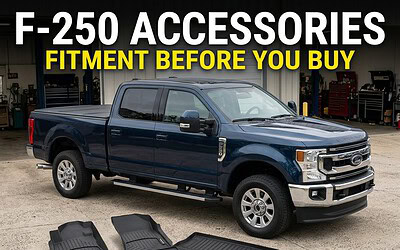
This guide explains the main types of Ford F250 interior accessories, what they do, which compatibility details matter, and how to avoid common installation mistakes.
Key Facts About Ford F250 Interior Accessories
- Floor liners: Help protect the cabin floor from dirt, mud, water, and everyday debris.
- Seat covers: Can reduce wear, stains, and damage from work clothes, pets, and regular use.
- Storage organizers: Help keep tools, emergency supplies, and personal belongings in designated spaces.
- Sunshades: Reduce direct sunlight entering through the windshield when the truck is parked.
- Interior electronics: Can improve convenience, but installation must account for wiring, visibility, and vehicle safety systems.
- Model-year compatibility: An accessory advertised for one F-250 may not fit every generation, cab style, or interior configuration.
- Installation matters: Accessories must not interfere with pedals, airbags, seat belts, or the driver’s view.
1. What Are Ford F250 Interior Accessories?
Ford F250 interior accessories are additions or replacement items designed to improve the truck’s cabin, protect its original materials, or make everyday tasks easier. They range from simple floor mats and seat covers to storage systems, organizers, protective trim, and certain electronic accessories.
The Ford F-250 is part of the Super Duty truck lineup. Owners may use it for construction work, hauling equipment, towing trailers, outdoor activities, or daily driving. Those different uses create different interior needs.
For example, a contractor who regularly enters the cab wearing dusty work boots may benefit most from durable floor liners and washable seat protection. Someone who spends several hours driving each day might place greater value on keeping the cabin organized and reducing clutter.
Interior accessories generally fall into three groups:
- Protection: Floor liners, seat covers, and protective door-sill pieces.
- Organization: Under-seat storage, console organizers, and cargo containers.
- Convenience and appearance: Sunshades, suitable phone mounts, and interior trim accessories.
Before purchasing anything, identify the exact model year and cab style of your truck. Also check the existing seat arrangement, floor material, console design, and any factory storage equipment. These details can affect whether an accessory fits correctly.
2. Floor Mats and All-Weather Floor Liners
Floor protection is one of the most practical upgrades for a truck that sees regular use. Mud, road salt, sand, spilled drinks, and moisture can collect on the floor, particularly during bad weather or after a day at a job site.
Standard carpet mats may work well for ordinary driving, but all-weather liners are often more suitable for conditions involving dirt and moisture. Their molded surfaces and raised edges can help contain debris, although the level of coverage depends on the specific design.
When comparing floor protection, consider these differences:
- Carpet mats: Offer a traditional appearance and can suit cleaner driving conditions.
- Rubber or all-weather mats: Are generally easier to clean after exposure to dirt and moisture.
- Vehicle-specific floor liners: May provide more precise coverage around the floor’s contours than universal mats.
Ford’s official F-250 Super Duty interior accessories catalog lists different floor-liner configurations, including options for carpet and vinyl flooring. The catalog is a useful starting point, but owners should confirm that the selected part matches their actual vehicle.
Installation deserves attention, too. A mat that slides forward or overlaps the accelerator or brake pedal can create a serious driving hazard. Use the designated retention points where provided, and never stack mats if doing so compromises pedal movement.
For trucks exposed to heavy mud or frequent wet weather, floor protection is often a sensible first upgrade because it addresses a common source of cabin wear.
3. Seat Covers and Seat Protection
Seat covers can help protect factory upholstery from stains, abrasion, pet hair, and repeated entry and exit. They may be especially useful for work trucks, hunting trips, camping, and vehicles shared by several drivers.
The important question is not simply whether a cover fits an F-250. It must fit the particular seat configuration.
Ford Super Duty trucks can have different front-seat layouts and rear-seat arrangements depending on cab style, trim, and equipment. A cover made for a different seat shape may bunch up, leave sections exposed, or interfere with built-in features.
Consider these factors before choosing a cover:
- Material: Durable fabrics may suit work use, while easier-to-clean materials can be useful for muddy clothing or pets.
- Seat configuration: Confirm whether the front seat is a bench, split bench, or separate bucket seats.
- Controls and functions: Check compatibility with seat adjustment controls, heating, ventilation, and other fitted features.
- Airbag compatibility: Covers must be specifically designed for seats with applicable side airbags. Never cover or obstruct an airbag deployment area with an unsuitable product.
- Cleaning requirements: Choose a material you can maintain without damaging the original upholstery.
A seat cover should stay securely in place without restricting seat-belt access or movement. Loose straps and excess fabric can create problems, particularly around seat mechanisms.
For owners who regularly carry pets, a suitable rear-seat cover may also help limit dirt and hair. However, pet restraints should still be used appropriately; a seat cover alone does not secure an animal during sudden braking.
4. Storage Organizers for Tools and Everyday Gear
A pickup cabin can become cluttered surprisingly quickly. Charging cables, work gloves, paperwork, flashlights, snacks, and emergency supplies may end up scattered across the seats or center console.
Storage accessories help give those items a designated place. Depending on the truck’s configuration, options may include under-seat organizers, console trays, soft-sided containers, and small compartments for everyday items.
An under-seat organizer can be useful when you want to keep equipment out of sight without taking up passenger space. Console organizers can make smaller items easier to find, while removable containers can be convenient for gear you need to carry into a workplace.
Before installing storage equipment, consider the following:
- Measure the available space rather than relying on a product photo.
- Confirm whether the truck has factory under-seat storage or other components occupying the area.
- Make sure the accessory does not block seat movement or rear-passenger foot space.
- Secure heavy objects so they cannot become projectiles during sudden braking.
- Keep emergency equipment accessible rather than burying it beneath unrelated items.
Ford’s official Super Duty accessories catalog includes interior and convenience categories that can help you identify vehicle-specific options.
Avoid placing loose tools or heavy objects on the dashboard or passenger seat. A well-organized cabin is not just tidier; it can also help reduce distractions and improve safety.
5. Sunshades, Phone Mounts, and Convenience Accessories
Not every interior upgrade needs to be permanent. Smaller accessories can make daily driving easier without requiring extensive installation.
A windshield sunshade helps limit direct sunlight entering the parked vehicle. It can make the cabin more comfortable to enter during hot weather and reduce direct exposure of the dashboard to sunlight. Its effectiveness depends on the fit, material, parking conditions, and weather.
Phone mounts and charging accessories can also be useful, particularly for drivers who rely on navigation. However, placement matters. A mount should not block the windshield, hide important instruments, interfere with controls, or obstruct an airbag deployment zone.
When evaluating convenience accessories, check:
- Whether the mount fits the dashboard or mounting surface securely.
- Whether a cable can be routed without interfering with steering or pedals.
- Whether the accessory obstructs the touchscreen, climate controls, or visibility.
- Whether an electrical accessory requires a suitable power source or professional installation.
Avoid mounting devices where they could strike an occupant or interfere with an airbag during a collision. Do not assume that a product described as universal will fit the shape and layout of every Super Duty interior.
The goal is to improve convenience without creating new distractions or safety problems.
6. OEM vs. Aftermarket Ford F250 Interior Accessories
Owners can generally choose between original-equipment-manufacturer (OEM) accessories and aftermarket alternatives. OEM accessories are supplied by or made for the vehicle manufacturer, while aftermarket accessories come from independent companies.
Neither category is automatically the best choice. The right option depends on fitment, materials, installation requirements, intended use, and cost.
| Accessory option | Main advantage | What to check |
|---|---|---|
| OEM accessories | Vehicle-specific options and manufacturer catalog information | Exact part number, model year, equipment, and installation instructions |
| Vehicle-specific aftermarket | More designs, materials, and configurations to compare | Fitment list, installation method, warranty, and safety compatibility |
| Universal accessories | May work across different vehicles and can offer flexibility | Actual dimensions, secure mounting, clearance, and interference risks |
| Used accessories | May reduce the initial cost | Damage, missing hardware, wear, part numbers, and fitment |
For a simple item such as a removable storage container, a universal accessory may be sufficient if it fits securely. For a floor liner, seat cover, or accessory that attaches near vehicle safety equipment, a vehicle-specific product is generally the more appropriate starting point.
Also remember that an aftermarket accessory’s fitment claim does not automatically mean the manufacturer has approved it. Read the seller’s compatibility information and the product’s installation instructions.
Before buying, compare the total cost, including any mounting hardware, installation labor, and potential modifications. The lowest purchase price may not represent the best value if the accessory fits poorly or requires additional work.
7. Model-Year Fitment and Common Installation Mistakes
One of the most common mistakes when choosing Ford F250 interior accessories is assuming that all F-250 trucks share the same interior.
The F-250 has changed across model generations, and equipment can differ between trim levels and cab configurations. Dashboard layouts, consoles, seats, flooring, and storage arrangements may not be interchangeable.
For example, a floor liner listed for a recent Super Duty generation should not automatically be assumed to fit an older truck. Similarly, a seat cover for a particular front-seat layout may not suit another configuration, even when both vehicles carry the F-250 name.
Use this checklist before ordering:
- Confirm the model year. Use the vehicle’s registration details or VIN to identify the correct vehicle.
- Identify the cab style. Determine whether the truck is a Regular Cab, SuperCab, or Crew Cab.
- Check the interior configuration. Note the seat layout, floor material, console design, and factory storage equipment.
- Read the fitment list. Verify the exact year range and any exclusions.
- Check installation requirements. Look for drilling, wiring, special tools, or professional installation recommendations.
- Inspect the installed accessory. Confirm that seats, controls, pedals, belts, and required visibility remain unobstructed.
For additional verification, use Ford’s official owner resources and consult the owner’s manual for the specific truck. If the accessory involves wiring, airbags, seat mechanisms, or other safety-related equipment, contact a qualified installer when the instructions or compatibility are unclear.
Never modify an airbag system or disable a factory safety feature simply to make an accessory fit.
8. How to Choose Accessories That Make Sense for Your Truck
The most useful Ford F250 interior accessories are the ones that solve a real problem in your daily routine. You do not need to replace everything in the cabin to make the truck more practical.
Start by identifying the areas that cause the most inconvenience or wear. If the carpet regularly gets muddy, prioritize floor protection. If tools and paperwork are always scattered around, consider storage. If the upholstery is exposed to work clothing or pets, suitable seat covers may be a better investment.
Use this simple priority guide:
- For work trucks: Focus on durable floor protection, easy-to-clean seat covers, and secure storage for everyday equipment.
- For family use: Consider protecting the floor and seats while keeping rear-passenger space accessible.
- For long-distance driving: Prioritize sensible organization and convenience accessories that do not distract the driver.
- For occasional towing and outdoor trips: Keep frequently used items organized and emergency supplies easy to reach.
- For appearance upgrades: Choose trim and protective pieces that complement the existing interior without interfering with controls or safety equipment.
You should also consider maintenance. Accessories that are easy to remove and clean may be more practical than products that trap dirt or require complicated installation. Check the manufacturer’s cleaning instructions before using strong cleaners or chemicals.
A useful way to control spending is to add one or two high-priority accessories first, then evaluate whether they actually improve daily use. This approach avoids filling the cabin with products that look appealing online but add little practical value.
Conclusion: Focus on Fit, Protection, and Everyday Use
Ford F250 interior accessories can improve cabin protection, storage, comfort, and convenience, but the best choices depend on how you use your truck. Floor liners, suitable seat covers, storage organizers, and carefully positioned convenience accessories each solve different problems.
Before purchasing, confirm the model year, cab configuration, seat layout, and installation requirements. Give special attention to floor-mat retention, airbag compatibility, pedal clearance, and secure storage.
The best upgrade is one that fits correctly, solves a real everyday problem, and preserves the safety features of your Ford F-250. Start with practical needs rather than appearance alone, and build your interior setup around how you actually drive and work.







0 Comments