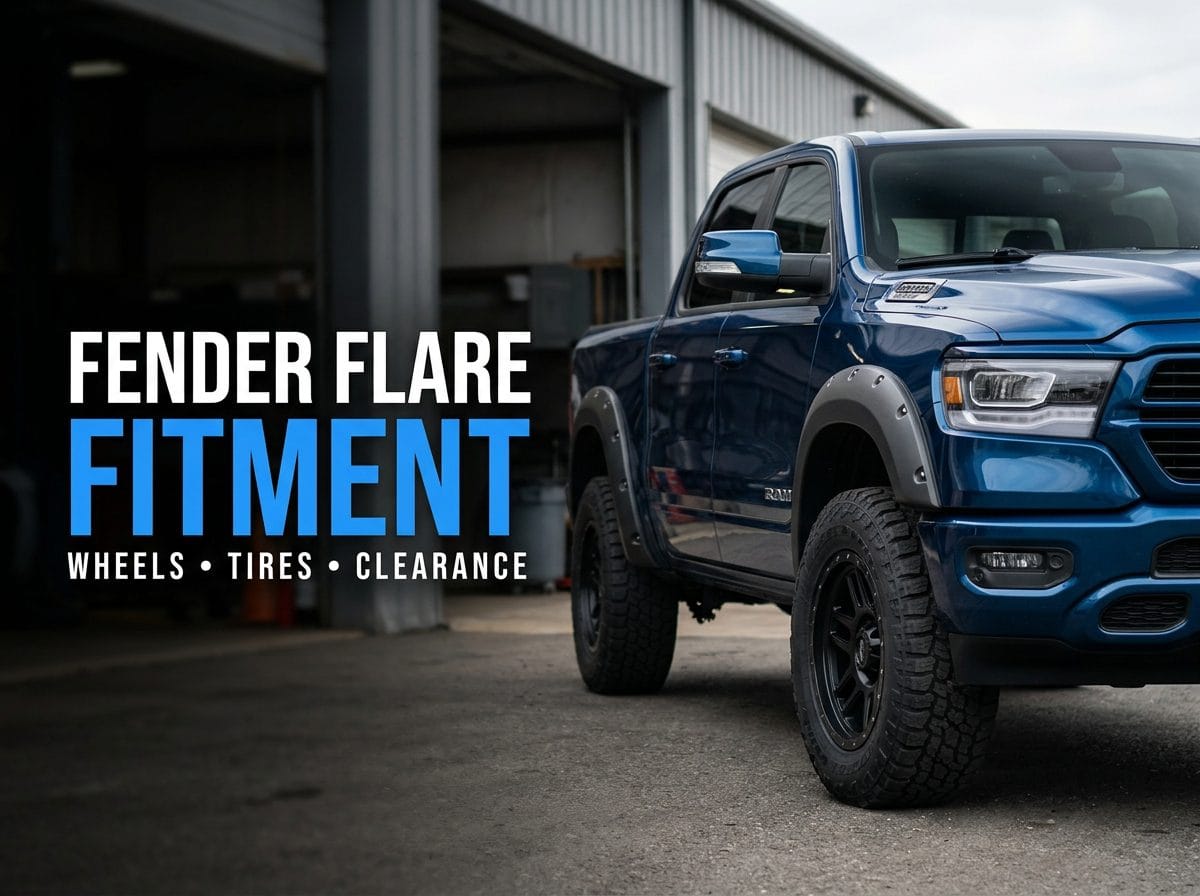
Dodge Ram 1500 fender flares can change your truck’s appearance, help protect its bodywork from road debris, and provide additional coverage around wider tires. However, choosing the right set involves more than finding a product that matches your model year. Wheel width, tire size, offset, body style, and trim level all affect compatibility.
Understanding the difference between tire coverage and mechanical clearance can save you from ordering the wrong parts. This guide explains how to match fender flares with your Ram 1500 wheel and tire setup, identify compatibility problems, and check fitment before installation.
Key Facts About Ram 1500 Fender Flare Fitment
- Fender flares extend the outer wheel-arch coverage but do not automatically create additional suspension clearance.
- The 2019–2024 Ram 1500 Classic and redesigned DT models have different exterior body designs.
- Wheel offset affects how far the wheel sits inward or outward.
- Wheel width and tire dimensions must be considered together.
- Some aftermarket fender flare kits exclude specific trims because of bumper or fender differences.
- Rubbing can occur even when a tire appears to fit beneath the flare while the truck is parked.
- Always verify the manufacturer’s application information before purchasing.
1. Identify Your Ram 1500 Body Style and Trim First
One of the biggest mistakes when choosing Dodge Ram 1500 fender flares is searching by model year alone.
Ram continued selling the older Ram 1500 body style as the Ram 1500 Classic after introducing the redesigned fifth-generation truck for 2019. Both versions were available during overlapping model years, but their body shapes are different.
The Ram 1500 Classic ceased production in 2024, according to the official Ram website. The redesigned DT model continued into subsequent model years.
For exterior accessories, this distinction matters because fender flares are shaped to follow particular wheel openings, body panels, and bumper connections.
Ram 1500 body-style differences
| Ram version | Model years | Fitment consideration |
|---|---|---|
| Fourth-generation DS | 2009–2018 | Check the exact body and exterior configuration. |
| Ram 1500 Classic DS | 2019–2024 | Uses the previous-generation body design. |
| Redesigned DT | 2019 onward | Requires a compatible DT-specific flare application. |
The 2019 model year deserves particular attention. A 2019 Ram 1500 Classic and a redesigned 2019 Ram 1500 should not be treated as the same accessory application.
For more information about replacement panels and exterior compatibility, see our Dodge Ram 1500 body-parts guide.
Trim-level compatibility matters too
Even within the same generation, not every fender flare kit fits every trim. Bumper connections, factory exterior styling, and fender designs can affect the installation.
For example, Rough Country’s Sport Fender Flares product page identifies Rebel and Warlock exclusions because of bumper and fascia differences. It also excludes RHO models because of their different fender design.
There is an important year-range detail on that listing: its product heading shows 2025–2027, while the vehicle fitment section identifies 2025–2026. Owners of a 2027 truck should confirm the application directly with Rough Country before ordering.
These exclusions apply to that particular product, not every aftermarket fender flare. Always check the exact manufacturer’s listing for your vehicle.
See the Rough Country Sport Fender Flares application information for the current product-specific details.
2. Understand Wheel Offset, Backspacing, and Wheel Width
Wheel offset is one of the most important measurements when matching fender flares with aftermarket wheels.
Offset describes the distance between the wheel’s hub mounting surface and its centerline. It is measured in millimeters and affects how far the wheel sits inside or outside the wheel opening.
Positive offset
Positive offset means the mounting surface sits toward the outer face of the wheel. For the same wheel width, this generally positions the wheel farther inward, closer to the vehicle’s suspension.
This can reduce how far the tire extends beyond the original fender edge. However, excessive inward positioning can create clearance problems around suspension components.
Zero offset
With zero offset, the mounting surface lines up with the centerline of the wheel. Its final position depends on the wheel width and the truck’s original mounting dimensions.
Negative offset
Negative offset means the mounting surface sits toward the inner side of the wheel. With the same wheel width, this generally moves the wheel farther outward.
Some truck owners prefer this arrangement because it creates a wider stance. However, the additional outward position can increase exposed tire tread and place the tire closer to the fender opening.
| Wheel specification | Typical position effect | Main consideration |
|---|---|---|
| Positive offset | More inward | Suspension clearance |
| Zero offset | Mounting surface at centerline | Actual wheel width and position |
| Negative offset | More outward | Fender coverage and outer clearance |
| Greater wheel width, same offset | Additional width on both sides | Inner and outer clearance |
What is wheel backspacing?
Backspacing measures the distance from the wheel’s mounting surface to its inside edge. It is usually measured in inches.
Offset and backspacing are related, but they are not interchangeable. Backspacing helps determine how much room remains between the wheel and nearby suspension components.
According to Tire Rack’s wheel-offset explanation, increasing wheel width while keeping the same offset adds width on both the inner and outer sides. This is why a wider wheel needs a separate clearance check even when its offset looks familiar.
Read our Ram 1500 wheel fitment guide for additional information about wheel dimensions, bolt patterns, offset, and compatibility.
You can also consult Tire Rack’s wheel offset and backspacing guide for the measurement definitions.
3. Match Fender Coverage to Your Tire Size
Once you understand wheel positioning, the next step is checking the tire dimensions.
A tire size such as 275/65R18 contains three important measurements:
- 275: Nominal tire section width in millimeters.
- 65: Sidewall height expressed as a percentage of the nominal tire width.
- 18: Wheel diameter in inches.
The letter R indicates radial tire construction.
These numbers help you understand the tire’s general dimensions, but they do not tell you exactly where the tire will sit beneath your Ram’s fenders.
Actual tire dimensions can vary between manufacturers and models. Approved wheel width, tread design, sidewall construction, and the mounting position all influence the final fit.
Why wider tires need more planning
Imagine replacing the original tires with a wider all-terrain set. Even if the overall tire diameter changes very little, the additional width may extend farther toward the suspension or beyond the original fender edge.
That creates two separate fitment questions:
- Does the tire have adequate clearance around the control arms, suspension, and inner wheel-well surfaces?
- Does the outer tire tread remain adequately covered by the original fender or installed flare?
A correctly selected flare may improve the second situation, but it cannot automatically fix the first one.
Another important distinction is tire width versus tire diameter. A wider tire affects its inner and outer positioning, while a taller tire generally requires additional vertical clearance inside the wheel opening.
For additional guidance, read our Ram 1500 tire guide, which explains tire categories and the important considerations involved in selecting replacement tires.
4. Check Tire Clearance and Rubbing Before Installation
A wheel and tire combination may appear to fit when the truck is parked. Problems can become visible when you turn the steering wheel or encounter a dip in the road.
That is why looking at your truck from the side is not a complete fitment inspection.
Important areas to inspect
When evaluating wheel clearance, pay attention to the following areas:
- Front fender liners.
- Rear sections of the front wheel openings.
- Front bumper and lower fascia connections.
- Upper control arms and nearby suspension components.
- Inner wheel-well surfaces.
- Factory mud flaps and their mounting brackets.
- Edges of the installed fender flare.
For the front wheels, clearance should be checked with the steering turned in both directions. The rear wheels also need sufficient clearance throughout the suspension’s operating movement.
Can a leveling kit or lift solve rubbing?
Not necessarily. A suspension lift or leveling kit changes vehicle ride height and may affect suspension geometry, but it does not automatically correct an unsuitable wheel offset.
A wheel that sits too far inward can still contact suspension components. A wheel that sits too far outward can still create interference with the outer wheel opening, liner, or bumper.
Do not assume that adding a lift means every larger tire will fit. The complete combination of tire dimensions, wheel width, offset, suspension configuration, and vehicle body design needs to be evaluated.
Our Ram 1500 lift kit guide explains why suspension changes require attention to compatibility and safety.
If you identify tire-to-body or tire-to-suspension contact, correct the mechanical clearance issue before driving. A larger fender flare is not a repair for rubbing.
When the available clearance is uncertain, have a qualified tire or suspension professional inspect the combination. Suspension-travel checks should be performed using appropriate equipment and safe procedures.
5. Choose the Right Fender Flare Style and Installation Method
After confirming the truck’s body compatibility and wheel clearance, you can compare different fender flare designs.
Factory-style fender flares
Factory-style flares generally follow the original wheel-arch shape. They suit owners who prefer a more understated appearance and want the exterior to retain a factory-oriented look.
The amount of additional coverage depends on the particular design. Do not assume every factory-style flare extends the same distance.
Pocket-style fender flares
Pocket-style flares usually have a more pronounced outer profile with visible bolt-style details. They provide a rugged appearance that some Ram owners prefer for customized trucks.
The decorative bolt appearance does not necessarily mean the flare must be drilled into the body. Some products use simulated bolt details and factory mounting points.
Always follow the installation method specified for the particular kit.
Extended fender flares
Extended designs are worth considering when the goal is greater outward tire coverage. Compare the manufacturer’s actual coverage dimensions and application notes rather than choosing a set based only on photographs.
Remember that additional outward coverage does not mean additional space behind the tire. You still need to verify the mechanical clearance of the wheel and tire combination.
Important installation considerations
Before installing the kit, compare all four pieces with the truck’s wheel openings. Front and rear flares have different shapes and mounting requirements, so check each position carefully.
Clean the mounting surfaces and test-fit the pieces before permanently attaching anything. Use only the specified clips, fasteners, adhesive, and mounting locations.
Some kits are designed around factory mounting points, while others require additional preparation or drilling. Never assume that instructions for one product apply to another.
After installation, inspect the edges for gaps, loose sections, and interference with nearby wheel-well components.
Keep the area behind the flares clean. Trapped dirt and moisture can affect the body finish over time, especially if the flare is not seated correctly.
Also check compatibility with factory splash guards. Some accessories are designed specifically for trucks equipped with production fender flares.
Our Mopar accessories for Ram 1500 guide discusses molded splash guards and their compatibility with specified factory fender flare configurations.
6. Verify Product Fitment and Avoid Common Buying Mistakes
Manufacturer fitment information should be your starting point before purchasing any fender flare kit. Product titles sometimes use broad vehicle descriptions, while the detailed application notes list important exclusions.
A product advertised for a Ram 1500 may still be unsuitable for a particular generation, trim, bumper design, or production configuration.
What to verify before ordering
- Model year: Confirm the exact year of your truck.
- Body style: Identify whether you have a Classic DS or redesigned DT.
- Trim: Record the exact trim designation and relevant exterior configuration.
- Wheel dimensions: Check wheel diameter and width.
- Offset: Compare the mounting position with the original setup.
- Tire dimensions: Record the actual tire size and approved wheel-width range.
- Suspension modifications: Identify any leveling kit, lift, or other modifications.
- Flare measurements: Check the stated height, outward projection, and coverage.
- Part number: Verify the exact manufacturer’s application and exclusions.
- Installation requirements: Check whether the kit uses factory mounting points, clips, adhesive, or drilling.
What manufacturer and safety documentation tell us
The 2024 Ram 1500 DT Consumer Information Guide explains the importance of using the tire specifications and load ratings approved for the vehicle. It warns that unapproved tire and wheel combinations may affect suspension dimensions, steering, handling, and braking.
This document is specific to the 2024 DT application. Owners of other model years and the Ram 1500 Classic should consult the documentation appropriate to their own vehicle.
The Tire and Loading Information Placard identifies the original tire sizes, recommended cold inflation pressures, seating capacity, and vehicle loading information.
For additional tire-safety guidance, NHTSA recommends checking the owner’s manual or vehicle tire placard when choosing replacement tires.
Review the official 2024 Ram 1500 Consumer Information Guide and NHTSA TireWise information before making changes to your tire setup.
What Ram owners discuss about wheel fitment
Owner discussions can help identify the questions people ask before changing wheels and tires. For example, an August 2025 discussion on the 5thGenRams forum involved a 2025 Ram 1500 owner considering a 20×9 wheel with +1 mm offset and a different tire size.
The conversation included questions about fender projection, tire position, and whether the proposed combination would fit without additional vehicle modifications.
This is an example of an owner’s fitment question, not a manufacturer-approved compatibility result. Forum photographs and individual experiences should not replace measured clearance checks or documented product specifications.
You can read the 5thGenRams tires, rims, and offset discussion for additional context.
Conclusion: Match Fender Coverage to the Complete Wheel Setup
The right Dodge Ram 1500 fender flares are not necessarily the widest or most aggressive-looking options. They are the ones designed for your truck’s exact body style, trim, wheel position, and tire dimensions.
Start by identifying whether your truck is a Ram 1500 Classic or the redesigned DT model. Then check wheel width, offset, backspacing, tire dimensions, and available clearance before choosing a flare.
Most importantly, remember that fender coverage and mechanical clearance are separate issues. A properly matched flare can improve exterior coverage and protect bodywork from road debris, but the wheel and tire combination must still clear the suspension and body throughout normal steering and suspension movement.
Measure first, verify the manufacturer’s written application information, and avoid ordering parts based only on appearance. This approach helps reduce unnecessary returns, installation problems, and unsuitable wheel and tire combinations.



0 Comments