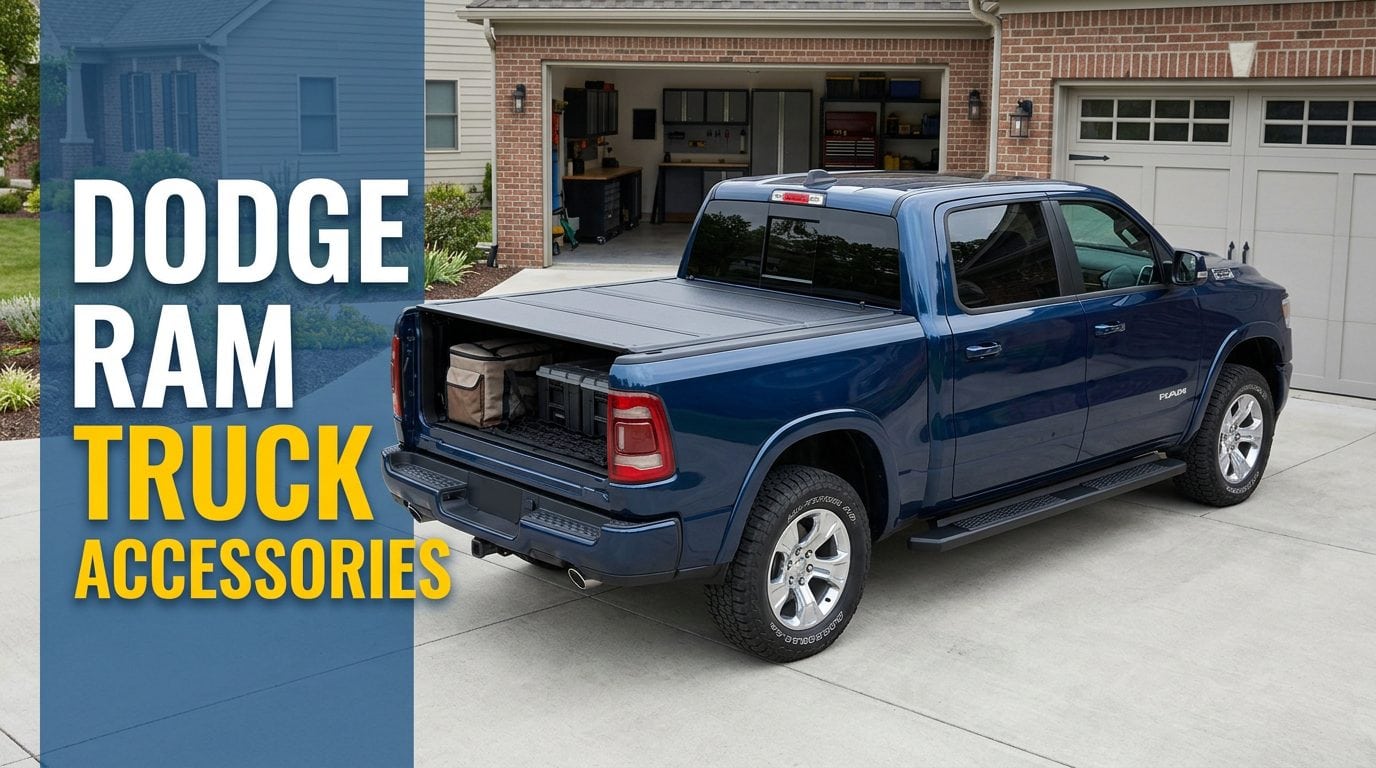
Whether you drive a Ram 1500, Ram 2500, or Ram 3500, understanding the available options can help you avoid unnecessary purchases and prevent fitment problems. This guide explains the main accessory categories, the differences between OEM and aftermarket equipment, and the checks worth making before modifying your truck.
Key Facts About Dodge Ram Trucks Accessories
- Accessories can improve cargo organization, interior protection, accessibility, and everyday convenience.
- Ram 1500, 2500, and 3500 models do not automatically share compatible accessories.
- Model year, cab configuration, bed length, trim, and factory equipment can affect fitment.
- OEM and aftermarket accessories offer different advantages in integration, selection, and customization.
- Electrical accessories require careful wiring and suitable protection.
- Towing equipment must match the truck, trailer, and applicable weight ratings.
- The most useful upgrades solve a real problem rather than simply adding visual changes.
What Are Dodge Ram Trucks Accessories?
Dodge Ram trucks accessories are additional components or equipment designed to change how a Ram truck looks, functions, carries cargo, or protects its interior and exterior. Some accessories are installed at the factory or dealership, while others are added by owners or independent installers.
Common examples include tonneau covers, bed liners, floor mats, running boards, toolboxes, cargo racks, seat covers, lighting, and trailer-related equipment. Certain upgrades are simple to install, while others require electrical work, specialized tools, or professional fitting.
The best starting point is to identify what your truck needs. A contractor may prioritize secure tool storage, while a daily commuter may benefit more from washable floor liners and a console organizer. An owner who regularly tows a trailer needs to pay particular attention to compatible towing equipment.
For a broader introduction, read our guide to Dodge Ram pickup accessories and their practical uses.
Popular Accessory Categories for Ram Trucks
1. Bed Covers and Cargo Protection
A tonneau cover sits over the pickup bed and helps conceal cargo while reducing direct exposure to rain, dirt, and road debris. Soft roll-up, folding, hard-panel, and retractable designs offer different combinations of convenience, rigidity, and bed access.
Bed liners and bed mats address another problem: wear caused by tools, equipment, and shifting cargo. A liner can help protect the bed’s finish, but installation and maintenance still matter. With some drop-in liners, trapped moisture or debris may need attention.
Before selecting a cover, verify the bed length, model year, bed-rail configuration, and any special features such as RamBox storage or a Multifunction Tailgate. A cover advertised for a Ram 1500 may not fit every Ram 1500 configuration.
Our guide to Ram 1500 bed covers and compatibility explains why fitment deserves attention before comparing designs.
2. Floor Liners and Interior Accessories
Floor liners are useful for drivers who regularly deal with mud, snow, sand, rain, or worksite debris. Vehicle-specific liners can provide more complete coverage than generic mats when they are designed for the truck’s floor and seating configuration.
Seat covers, console organizers, storage trays, and rear-seat organizers can also make the cabin easier to maintain. Before installation, confirm that an accessory does not obstruct pedals, interfere with seat movement, or affect airbags and seat belts.
Interior upgrades are often most valuable when they solve a recurring inconvenience. A washable liner or a secure place for tools and everyday items may provide more practical benefit than an accessory chosen only for its appearance.
3. Running Boards and Side Steps
Running boards and side steps make entering and exiting a taller truck easier. They can also provide a finished appearance and, depending on the design, some protection against road debris.
Choose a step designed for the exact truck and cab configuration. Check its mounting points, load rating, ground clearance, and compatibility with any lift or leveling kit. A step that works well on a stock-height truck may be less suitable for frequent off-road driving.
4. Towing and Hauling Equipment
Towing accessories include compatible hitch components, trailer wiring, towing mirrors, brake controllers, and related equipment. These parts should be selected according to the truck’s specifications and the trailer’s requirements.
Do not assume that a hitch or electrical connector is suitable simply because it can be installed. Check the owner’s manual, applicable weight ratings, required trailer equipment, and installation instructions. Include cargo and trailer tongue weight when assessing the truck’s payload limits.
For towing, the limits of the specific vehicle configuration matter more than a general rating advertised for the model family.
5. Lighting and Electronic Accessories
Auxiliary lighting, dash cameras, phone mounts, and other electronic accessories can add convenience when properly selected and installed. However, powered equipment introduces additional wiring and electrical requirements.
Use appropriate fusing, secure connections, and installation methods approved for the application. Poorly installed electronics can cause electrical faults or unwanted battery drain. Added lighting must not impair required vehicle lighting, and local regulations may restrict certain colors, placements, or uses.
OEM vs. Aftermarket vs. Universal Accessories
OEM accessories are associated with the vehicle manufacturer and are generally developed for specific applications. Aftermarket accessories come from independent manufacturers and often offer a wider range of styles and specialized designs. Universal accessories are intended for multiple vehicles, but they may require extra measurement or adaptation.
Mopar’s official catalog offers Ram-specific accessories across categories such as bed products, cargo management, floor mats, electronics, side steps, and trailering. You can explore the official Mopar Ram accessories catalog to check vehicle applications.
| Comparison | OEM / vehicle-specific | Aftermarket | Universal |
|---|---|---|---|
| Fitment | Designed for listed applications | Depends on product and fitment listing | Requires careful measurement |
| Selection | Factory-oriented options | Broad range of designs and functions | General-purpose options |
| Installation | May use vehicle-specific mounting points | Ranges from simple to complex | May need adjustments |
| Customization | Often follows factory styling | Many styles and specialized features | Depends on the design |
| Best consideration | Application and integration | Verified fitment and installation quality | Measurements and secure mounting |
No category is automatically best for every owner. Compare the exact application, instructions, warranty terms, materials, and installation requirements instead of assuming that price alone determines quality.
How to Choose Accessories for Your Truck
Start with the truck itself. Record the model year, model, cab configuration, bed length, trim, and relevant factory options. These details can affect whether a part fits and whether it works with existing equipment.
Next, identify the problem you want to solve. If cargo gets wet or remains visible, investigate bed-cover options. If muddy footwear makes cleanup difficult, consider compatible floor liners. If entering the cab is awkward, look at properly rated steps that suit the truck’s ride height.
Then check the manufacturer’s fitment guide. Confirm the exact vehicle application, required hardware, installation procedure, and any exclusions. If the product requires electrical connections or structural changes, consider whether professional installation is appropriate.
For more ideas focused on everyday use, see our guide to Dodge Ram 1500 daily-driver accessories and our overview of popular Ram 1500 accessory categories.
Common Mistakes to Avoid
Buying based on appearance alone
A modification may look good in a photograph but perform poorly for your needs. Consider how it affects daily access, cargo capacity, cleaning, visibility, and ground clearance.
Assuming every model year is compatible
Truck designs and mounting systems can change. Verify the exact model-year application rather than relying on a broad label such as “fits Ram.” Bed covers, mirrors, steps, and electronic components deserve particular attention to fitment.
Overlooking payload and towing limits
Accessories add weight. Heavy toolboxes, racks, bumpers, and other equipment can reduce the remaining payload available for occupants and cargo. Follow the vehicle’s stated ratings and the accessory manufacturer’s instructions.
Making unsafe electrical changes
Avoid improvised wiring that bypasses appropriate fuses or interferes with factory systems. For lighting and electronics, use a suitable installation method and check the requirements before connecting equipment.
Ignoring maintenance
Accessories still need care. Clean floor liners and bed protection regularly, inspect mounting hardware, check seals on bed covers, and look for corrosion or damaged wiring. Follow the manufacturer’s maintenance instructions.
What Reliable Sources and Truck Owners Can Tell You
Manufacturer catalogs and vehicle manuals are the best starting points for fitment, rated capacities, installation requirements, and vehicle-specific limitations. The official Mopar accessories resource explains its vehicle-specific accessory approach and provides access to accessory categories and catalogs.
Owner discussions on forums and Reddit can help identify recurring real-world questions, such as cover leaks, installation difficulty, storage limitations, or compatibility concerns. However, an owner’s experience with one truck does not establish that the same result will occur on every model year or configuration.
Use community discussions to develop questions, then confirm technical details against the relevant manufacturer’s documentation. For safety-related modifications, the National Highway Traffic Safety Administration provides vehicle safety information and guidance about applicable requirements.
What Dodge Ram Truck Owners Should Consider Going Forward
Modern trucks combine more factory equipment, electronic systems, and specialized configurations than a simple accessory label can describe. That makes accurate fitment and proper installation increasingly important.
Owners can get more value from a planned upgrade than from buying several accessories at once. Prioritize the items that protect the truck, make routine tasks easier, or support a specific work or recreation need. Keep installation records and instructions, and inspect modified areas during routine maintenance.
If a modification affects suspension, steering, lighting, towing, or another safety-related system, check the manufacturer’s guidance and applicable local rules before proceeding. A qualified technician can help assess complicated installations.
Conclusion
Dodge Ram trucks accessories can improve comfort, cargo management, protection, and everyday utility when they are chosen for the right reasons. Bed covers, floor liners, running boards, towing equipment, and electronics each serve different purposes, so there is no universal accessory list that suits every owner.
Before buying, confirm your truck’s exact configuration, verify compatibility, understand the installation requirements, and consider the effect on payload, clearance, and safety systems. The best accessory is not necessarily the most expensive or the most popular. It is the one that solves a genuine problem while fitting your truck correctly.






0 Comments