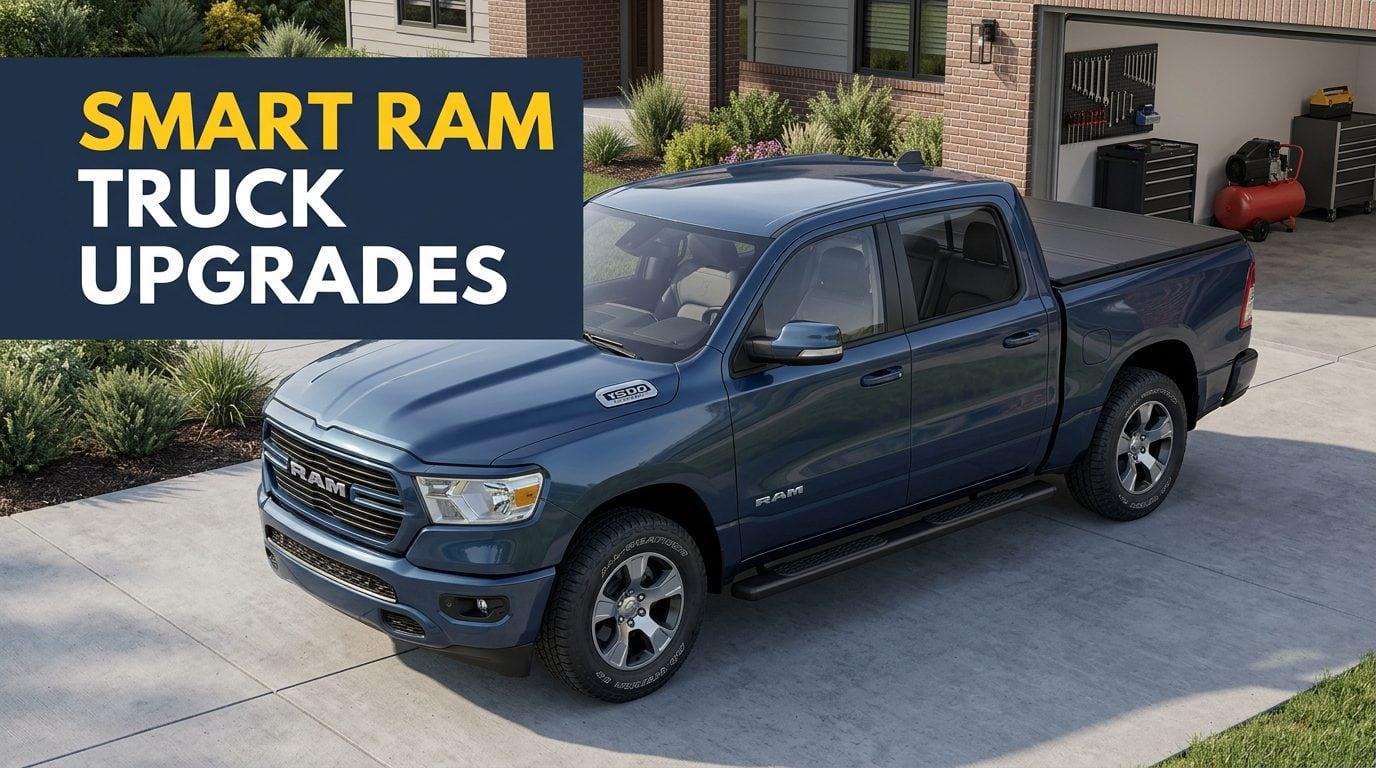
Not every accessory improves every truck. A bed cover might help protect cargo, while running boards can make getting into a lifted truck easier. Towing equipment, suspension changes, and lighting upgrades require extra attention because the wrong setup can create compatibility or safety problems. This guide explains the main accessory categories, their practical benefits, and what to check before installing anything.
Key Facts About Dodge Ram Truck Accessories
- Confirm the truck’s model year, trim, cab configuration, and bed length before selecting accessories.
- Choose accessories according to actual driving, hauling, towing, and storage needs.
- OEM and aftermarket accessories can differ in fit, materials, installation requirements, and warranty coverage.
- Bed covers and liners serve different purposes; one does not automatically replace the other.
- Heavy accessories and cargo contribute to the truck’s total load.
- Electrical accessories may require vehicle-specific wiring or additional components.
- Keep the owner’s manual and manufacturer installation instructions available when making modifications.
What Are Truck Accessories for a Dodge Ram?
Truck accessories are optional components added to a vehicle to support its function, protect surfaces, organize equipment, improve comfort, or change its appearance. Some are simple additions, such as all-weather floor mats. Others, including towing components, lighting systems, and suspension upgrades, may require careful installation and compatibility checks.
Ram trucks are available in different configurations. A Ram 1500 is not identical to a Ram 2500 or Ram 3500, and two trucks from the same model year can still have different cab styles, bed lengths, trim packages, or factory equipment. An accessory that fits one configuration may not fit another.
For this reason, start with the vehicle identification number (VIN), model year, model, trim, cab style, and bed dimensions. The official Mopar Ram parts and accessories catalog lets owners explore vehicle-specific categories and check applicable fitment information.
It is also helpful to separate accessories into three broad groups:
- Protection: bed liners, floor liners, mud flaps, and protective covers.
- Utility: cargo organizers, running boards, bed storage, and towing equipment.
- Appearance and convenience: grille accessories, interior organizers, lighting additions, and exterior trim.
These categories can overlap. A bed cover, for example, can change the truck’s appearance while also helping shield cargo from rain and casual access. However, its actual protection depends on the cover design, installation, and weather conditions.
Which Accessories Make the Biggest Difference?
The most useful upgrades usually solve a problem the owner experiences regularly. Before comparing brands or styles, consider which part of truck ownership could be easier, safer, or less messy.
Bed liners and bed mats
A bed liner or mat helps protect the cargo area from scratches, scuffs, and wear caused by tools, equipment, and other loads. Spray-in liners, drop-in liners, and removable mats have different installation methods and maintenance needs. A removable mat can be convenient for occasional hauling, while a permanently installed liner offers a different kind of coverage.
Check whether the liner fits the exact bed length and configuration. Keep drainage areas clear where the design requires it, and inspect underneath removable liners for trapped moisture or debris.
Tonneau covers and cargo storage
A tonneau cover sits over the truck bed. Depending on its design, it may help shield cargo from weather, reduce direct visibility into the bed, and provide a cleaner appearance. Soft folding, hard folding, retractable, and hinged covers differ in access, storage, and installation requirements.
A cover should not be treated as a guarantee of a completely waterproof bed. Water can enter around seams and openings, and some covers limit how tall cargo can be carried. Check whether the selected cover works with a factory cargo-management system, bed rails, or other installed equipment.
Running boards and side steps
Running boards and side steps provide a foothold when entering or leaving the cab. They can be particularly useful for passengers, families, and owners whose trucks have a higher ride height. Fixed steps, retractable steps, and vehicle-specific running boards differ in ground clearance and installation complexity.
Before choosing a set, confirm the cab configuration, mounting points, weight limits, and clearance requirements. Recheck the fasteners according to the manufacturer’s instructions, especially after installation or off-road use.
Floor liners and seat protection
All-weather floor liners help collect mud, water, sand, and road debris. Seat covers can protect upholstery from everyday wear, pets, work clothes, and outdoor activities. Choose liners designed to fit around the pedals and factory retention points. Poorly fitted floor mats can interfere with pedal movement.
Seat covers need similar care. On trucks equipped with seat-mounted airbags, use covers explicitly designed for that application. Never assume a universal cover is safe simply because it fits over the seat.
Towing and hauling equipment
Hitch components, trailer wiring, brake controllers, bed extenders, and cargo-management accessories can help a truck handle specific tasks. Their suitability depends on the truck’s equipment and the requirements of the trailer or load.
Never assume an accessory increases the vehicle’s rated towing or payload capacity. Consult the owner’s manual and vehicle-specific ratings before hauling. For towing equipment, confirm the receiver, ball mount, hitch ball, trailer connector, and other components are appropriate for the intended setup.
OEM vs. Aftermarket vs. Used Accessories
There is no single source that is best for every accessory. The important differences are fitment, quality, documentation, installation, support, and the condition of the part.
| Accessory source | Potential advantages | What to check |
|---|---|---|
| OEM or factory accessory | Vehicle-specific application information and manufacturer support | Exact model-year fitment, part number, availability, and applicable warranty terms |
| Vehicle-specific aftermarket | More styles, designs, and feature choices | Independent fitment data, materials, installation instructions, and support |
| Universal aftermarket | May work across several vehicle types or configurations | Dimensions, mounting method, clearances, load limits, and required modifications |
| Used or take-off accessory | May offer a lower-cost option or a discontinued design | Cracks, corrosion, missing hardware, altered brackets, part numbers, and fitment |
OEM means original equipment manufacturer. Genuine Mopar accessories are designed for applicable Chrysler, Dodge, Jeep, and Ram vehicles. The official Mopar accessories website provides access to accessory information and vehicle-specific catalogs.
Aftermarket products can also be useful, but quality and compatibility vary by manufacturer and product. Read the fitment notes rather than relying on a listing title alone. If a seller says an accessory fits a broad range of Ram trucks, verify that your exact cab, bed, trim, and factory options are included.
How to Check Fitment Before You Install Anything
Fitment is more than matching the words “Dodge Ram” on a product listing. Use a consistent checklist before ordering an accessory or scheduling installation.
- Identify the truck. Confirm the model year, model, trim, cab style, and bed length. Use the VIN when a catalog offers VIN-based compatibility checks.
- Verify the part number. Compare the listed application and part number with manufacturer information. Ask the seller or manufacturer when the application is unclear.
- Check existing equipment. Look for factory bed rails, RamBox storage, a multifunction tailgate, running-board mounting points, sensors, or other features that may affect installation.
- Read the installation instructions. Check whether the job requires drilling, wiring, special tools, torque specifications, or professional installation.
- Check clearances. Make sure the accessory does not interfere with doors, tailgate operation, tires, suspension travel, exhaust components, cameras, lights, or sensors.
- Keep documentation. Save receipts, instructions, warranty information, and any required maintenance details.
These checks matter most when an accessory attaches to structural mounting points, changes the suspension or wheels, or connects to electrical systems. A part that can be physically bolted on is not automatically appropriate for road use.
Common Accessory Mistakes and Maintenance Concerns
Even a well-designed accessory can cause problems if it is installed incorrectly, used outside its intended limits, or neglected during routine maintenance.
Choosing by appearance alone
A wide running board, oversized wheel, or bulky bed rack might look right but may interfere with ground clearance, loading, or other equipment. Think through how the truck will be used before deciding which design to install.
Overlooking load limits
Accessories add weight. Toolboxes, bed racks, campers, winches, and other equipment can reduce the remaining payload available for passengers and cargo. Follow the truck’s ratings and the accessory manufacturer’s limits. Do not assume heavier-duty-looking parts increase the truck’s rated capacity.
Neglecting fasteners and corrosion
Road salt, mud, water, vibration, and off-road driving can affect mounting hardware. Inspect accessories periodically for loose fasteners, corrosion, cracked brackets, damaged wiring, and unusual movement. Follow the product instructions for cleaning, lubrication, and tightening rather than applying a generic maintenance interval to every product.
Making electrical changes without checking compatibility
Auxiliary lights, power outlets, and electronic accessories may require specific wiring, fuses, relays, or vehicle-compatible interfaces. Incorrect wiring can damage equipment or create an electrical hazard. Use the specified installation method and consult a qualified technician when the instructions or vehicle wiring are unclear.
Assuming modifications never affect warranty coverage
Warranty questions depend on the warranty terms, the accessory, and the nature of a failure. Installing an accessory does not automatically mean every factory warranty is void, but damage caused by an unsuitable or improperly installed modification may not be covered. Review the applicable warranty documents and ask the manufacturer or dealer about a specific concern.
How to Choose Accessories for Your Driving Needs
A useful way to avoid unnecessary spending is to group your needs by how the truck is used most often.
- Daily commuting: prioritize fitted floor liners, practical storage, and accessories that make entry and exit comfortable.
- Work and tools: consider bed protection, secure storage, cargo organization, and appropriate load management.
- Outdoor trips: look at weather-resistant storage, suitable bed protection, and equipment designed for the terrain and conditions.
- Towing: verify the factory towing equipment, trailer connections, hitch compatibility, and vehicle-specific limits before adding components.
- Appearance upgrades: compare finishes and fitment, while making sure the accessory does not block required lights, sensors, or visibility.
It can help to make a short priority list: one accessory that solves an immediate problem, one that protects a heavily used area, and any additional upgrade that serves a clear purpose. This approach makes it easier to compare installation effort and long-term upkeep instead of judging accessories only by their initial appearance.
What Dodge Ram Owners Should Check in 2026
Accessory catalogs and vehicle configurations change over time, so a product that fits an older Ram may not fit a newer model. Current model-year fitment should be verified through the manufacturer or seller, particularly for electronics, body-mounted accessories, bed covers, and towing components.
For current applications, start with the Mopar Ram 1500 parts catalog or the broader Ram parts and accessories catalog. These resources organize parts by vehicle and category. Check the actual product application and availability before ordering; a catalog page alone does not confirm that every accessory fits every truck.
For safety-related modifications, use the vehicle owner’s manual and applicable manufacturer instructions as the primary references. The National Highway Traffic Safety Administration (NHTSA) also provides vehicle-safety information and guidance on federal vehicle requirements. Local rules may affect lighting, vehicle height, tires, and other modifications, so check the requirements that apply where the truck is registered and driven.
Remember that an accessory’s purpose is to support the truck’s intended use, not to replace sound maintenance or override factory limits. A well-matched accessory that is correctly installed and maintained is generally a more practical choice than a more complicated upgrade with unclear compatibility.
Conclusion: Choose Accessories That Solve Real Problems
The best truck accessories for a Dodge Ram are the ones that match your truck’s exact configuration and make everyday use easier without creating new fitment or safety concerns. Bed liners, tonneau covers, running boards, floor liners, storage systems, and towing equipment all serve different purposes.
Before buying, verify the part number, review installation requirements, and check weight and compatibility limits. Start with the needs you experience most often, then add accessories that offer a clear practical benefit. That is a reliable way to build a useful Ram setup while protecting the truck’s functionality and long-term condition.
Official Resources
- Mopar Ram Parts and Accessories Catalog — browse vehicle-specific parts and accessory categories.
- Mopar Ram 1500 Parts Catalog — check Ram 1500 applications by model year.
- Official Mopar Accessories — explore accessory information and catalogs.
- National Highway Traffic Safety Administration — consult vehicle-safety information and federal requirements.






0 Comments