

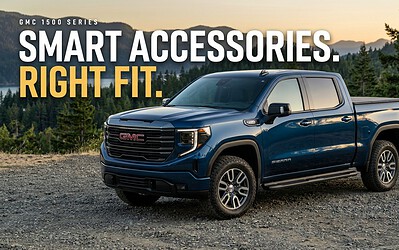
The challenge is that not every accessory fits every GMC. A product designed for one Sierra model year may not fit another configuration, while Canyon accessories can have completely different mounting points and electrical requirements. Buying without checking those details can lead to wasted money, installation problems, or equipment that doesn’t work as expected.
This guide explains the main types of GMC truck accessories, how to check compatibility, what to consider before installation, and how to make upgrades based on the way you actually use your truck.
Key GMC Accessory Facts at a Glance
- GMC accessories include interior protection, bed covers, running boards, cargo equipment, wheels, lighting, and towing products.
- Accessory availability and fitment depend on the specific GMC model and configuration.
- Checking your VIN or exact year, make, and model helps prevent incorrect orders.
- Aftermarket accessories can offer more choices, but their compatibility and warranty terms need separate verification.
- Electrical accessories require careful installation and correct wiring.
- Additional equipment and cargo count toward your truck’s weight limits.
- The best accessory is one that solves a genuine problem without interfering with the truck’s existing systems.
What Do GMC Accessories Actually Include?
GMC accessories are additional components or equipment designed to improve a vehicle’s functionality, protection, comfort, storage, or appearance. Some are installed when a new vehicle is ordered. Others can be added later through a dealership or an aftermarket supplier.
For pickup owners, the main accessory choices generally fall into a few groups. Bed covers protect cargo, running boards make cab access easier, floor liners protect the interior, and cargo-management products help organize tools and equipment.
The official GMC Accessories store organizes its products into categories such as bed covers, assist steps, running boards, cargo liners, roof carriers, interior cargo management, floor protection, exterior accessories, and wheels.
That range is important because GMC owners have different needs. A Sierra used for construction work may need cargo organization and a durable bed setup. A Canyon used for commuting and weekend trips may benefit more from interior protection, convenient storage, and a suitable bed cover.
RAM Care Pro also discusses accessory selection across other pickup trucks. Our pickup accessory overview provides additional examples of how truck owners approach practical modifications. Its vehicle-specific information applies to RAM trucks, not GMC fitment.
Which GMC Accessories Are Worth Understanding?
There isn’t one accessory package that suits every owner. Understanding what each category does is a better starting point than buying parts simply because they look good in photographs.
1. Bed Covers and Cargo Protection
A tonneau cover is one of the most recognizable pickup accessories. It covers the truck bed and helps protect cargo from weather exposure and casual visibility. Depending on its design, it may also allow the owner to open part or all of the bed when loading larger items.
Common styles include soft roll-up, hard roll-up, folding, and retractable covers. Each has trade-offs involving price, access, weight, security, and installation.
Before choosing one for a GMC Sierra or Canyon, check the exact bed length, cab configuration, bed-rail design, and any existing factory equipment. Don’t assume that a cover advertised for a GMC pickup fits every Sierra or Canyon.
For general information about cover styles, storage access, and installation considerations, see our Ram 1500 bed-cover guide. Its measurements and product fitment are RAM-specific and should not be used to select a GMC cover.
2. Running Boards and Assist Steps
Running boards provide a stepping surface along the side of the truck. They can make climbing into a taller pickup easier and may also help protect portions of the lower body from road debris.
Fixed running boards are relatively straightforward. Powered versions extend when needed and retract when the doors close, but they introduce motors, wiring, and additional installation considerations.
Think about the truck’s normal use before choosing. A daily driver may benefit from a wide, fixed step. An off-road-oriented truck may need a design that doesn’t sacrifice too much ground clearance.
Our running board guide discusses mounting styles, step surfaces, and general selection considerations. Remember that its fitment information applies to RAM 1500 models rather than GMC trucks.
3. Interior Protection and Storage
Interior accessories can make a noticeable difference because the cabin gets used every day. All-weather floor liners help collect mud, water, and dirt. Seat protection can be useful for work clothes, pets, and outdoor equipment.
Console organizers, storage trays, and rear-seat storage products can also reduce clutter. The important detail is choosing an item that matches the actual console, seat layout, and interior design of your GMC.
A floor mat that shifts around or interferes with pedal operation is not a useful upgrade. Always check the manufacturer’s fitment details and ensure the installed mat stays securely in place.
For more ideas about protective interior equipment and cabin organization, our interior upgrade guide covers similar categories for RAM owners. It is not a GMC compatibility guide.
4. Towing and Trailering Equipment
GMC pickup owners who regularly tow may need equipment such as hitch assemblies, trailer wiring adapters, mirrors, and other trailering components.
This is an area where specifications matter more than appearance. The hitch must be suitable for the intended application, and the complete towing setup must stay within the vehicle’s ratings.
GMC’s official parts information lists several trailering accessory categories, including hitch ball assemblies, wiring adapters, fifth-wheel hitches, and gooseneck hitches. Availability should be checked on the vehicle-specific accessory page.
5. Lighting and Electronic Accessories
Additional lighting, dash cameras, charging equipment, and auxiliary switches can make a truck more useful. However, electrical accessories need more care than simple bolt-on equipment.
Before installing powered equipment, check its voltage and current requirements, wiring instructions, fuse protection, and whether your truck needs an additional control module. Never assume that an available connector can safely power any accessory.
OEM vs. Aftermarket vs. Universal GMC Accessories
GMC owners generally have three broad accessory choices: genuine GMC accessories, products made by independent aftermarket manufacturers, and universal equipment designed to work with a range of vehicles.
None of these categories is automatically the best. The right choice depends on the accessory, the installation, the warranty, and the quality of the manufacturer’s fitment information.
| Accessory Type | Main Advantage | What to Check |
|---|---|---|
| Genuine GMC | Designed around GMC vehicle specifications | Exact model, year, trim, and warranty terms |
| Aftermarket | More brands, designs, and configurations | Manufacturer fitment guide, installation, and product warranty |
| Universal | May work across different vehicle applications | Measurements, mounting points, clearance, and modifications needed |
GMC states that its genuine accessories are designed and engineered to complement its vehicles and are tested against GMC standards. That makes the official catalog a useful starting point when factory integration and fitment are priorities.
Aftermarket products can still be suitable. Some owners prefer their wider selection, different designs, or specialized features. The key is to rely on the manufacturer’s application guide rather than a vague marketplace description.
A universal product deserves the most careful inspection. If an accessory needs drilling, altered mounting brackets, or changes to existing vehicle components, understand the work involved before ordering it.
How to Check GMC Accessory Compatibility Before Buying
Compatibility is one of the most important parts of accessory selection. Two GMC pickups can look similar but have different bed dimensions, mounting points, trim equipment, or electrical configurations.
GM’s parts and accessories guidance recommends identifying the vehicle with its VIN or by entering its year, make, and model. It also advises providing additional vehicle details to improve fitment accuracy.
Before placing an order, work through these checks:
- Confirm the model and year. Identify whether your vehicle is a Sierra 1500, Sierra HD, Canyon, or another GMC model. Don’t rely on the badge alone.
- Check the cab configuration. Cab design can affect step length, mounting positions, and accessory compatibility.
- Measure the bed. For bed covers, liners, racks, and dividers, verify the actual bed application rather than choosing by the vehicle name alone.
- Confirm the trim. Factory steps, special exterior equipment, and interior layouts can differ between trims.
- Review existing equipment. Check for factory bed liners, rail systems, auxiliary switches, parking sensors, or other equipment that could affect installation.
- Check the part number. Use the manufacturer’s listed part number and vehicle application when available.
- Ask about installation. Contact the seller or a GMC service department when the fitment description is unclear.
The official GM parts and accessories installation guide explains how to identify the correct accessory and arrange installation with a Certified Service provider.
This extra research is especially useful when shopping for products advertised as fitting several model years. A broad fitment claim does not necessarily mean that every trim, cab, or bed configuration is included.
How Accessories Affect Payload and Towing
Accessories can add useful equipment, but they also add weight. That matters when you regularly carry passengers, tools, camping equipment, or other cargo.
GMC explains that Gross Vehicle Weight Rating (GVWR) includes the vehicle, passengers, cargo, and equipment. Payload is the maximum allowable weight of cargo, including occupants and optional equipment. These are important limits to check before adding heavy accessories.
For example, a bed rack, toolbox, storage system, heavy cover, and loaded cargo all contribute to the truck’s overall weight. A modification that seems small on its own can become significant when combined with several other additions.
Owners who tow should also check the complete hitch and trailer setup. Adding a product does not increase the truck’s factory towing capacity. Use the ratings and instructions specified for the exact vehicle configuration.
If you’re considering major equipment, suspension changes, or a heavy-duty work setup, ask a qualified GMC professional to review the application. Correct weight distribution and safe mounting matter just as much as whether the accessory physically fits.
Installation, Wiring, and Common Accessory Problems
Some GMC accessories are simple enough for a careful DIY owner. Floor liners, certain organizers, and some clamp-mounted bed covers may require only basic tools. Other equipment needs more planning.
Powered running boards, auxiliary lights, electronic accessories, and towing components can involve vehicle wiring, control modules, or specific mounting requirements. Incorrect installation can result in poor operation, damaged components, or electrical issues.
GMC provides an example of why accessory wiring should not be improvised. Its official accessory catalog lists an accessory power distribution box for certain 2024–2026 Canyon trims. The module is designed to manage external accessories, and GMC recommends authorized dealer installation. Its listed application is specific to those vehicles, not every GMC pickup.
GM also identifies improperly grounded added accessories as one possible cause of unusual battery drain. That is why clean connections, correct grounding, appropriate fuses, and manufacturer installation instructions matter.
For a related explanation of how incorrectly installed electrical accessories can contribute to battery-drain concerns, see our RAM electrical troubleshooting guide. It covers RAM-specific diagnosis, not GMC repair procedures.
Before attempting a complex installation, ask these questions:
- Does the accessory require drilling, cutting, or permanent modification?
- Does it connect to the factory electrical system?
- Are special brackets, relays, fuses, or modules required?
- Does the manufacturer provide installation instructions?
- Is professional installation recommended?
If the instructions are unclear or the installation affects safety-related systems, get help from an appropriately qualified technician.
GMC Accessory Warranty and Long-Term Maintenance
Warranty coverage is another detail worth checking before buying. A factory accessory, a dealer-installed accessory, and a product supplied by an independent manufacturer may have different warranty arrangements.
GMC’s published accessory guidance explains that most eligible GMC accessories installed before delivery by a GMC dealer or approved Accessory Distributor Installer are covered under the applicable portion of the New Vehicle Limited Warranty.
For eligible GMC accessories installed after delivery, GMC describes coverage for the longer of 12 months or 12,000 miles, or the remaining balance of the applicable portion of the New Vehicle Limited Warranty. The policy excludes Associated Accessories, which are covered by their accessory manufacturer’s warranty instead. Always check the current terms for the specific item.
There is an important distinction between an accessory warranty and the warranty on the truck itself. GMC states that alterations to the original GM-equipped vehicle or chassis are not covered by the New Vehicle Limited Warranty. The responsible installer or upfitter handles warranties for its equipment and alterations.
This doesn’t mean that every aftermarket accessory automatically cancels the entire vehicle warranty. It means that the accessory and any problems associated with an alteration need to be considered under the applicable warranty terms.
For long-term care, inspect mounting hardware, clean bed-cover seals, check step brackets, and look for corrosion or loose electrical connections. Follow the accessory manufacturer’s maintenance instructions, particularly after winter driving or frequent exposure to mud and road salt.
Useful official resources include the GMC parts and accessories warranty FAQ and the GMC manuals and guides page, where owners can find vehicle-specific documentation and accessory installation information.
What GMC Owners Are Discussing About Accessories
Owner discussions can help identify the practical problems people are trying to solve. They are particularly useful for discovering which accessory categories owners consider after buying a truck.
Recent GMC Canyon discussions mention items such as bed covers, mud flaps, all-weather floor mats, storage organizers, window vents, running boards, and bed liners. Sierra owners also discuss tonneau covers, console storage, lighting, seat protection, and cargo organization.
These conversations provide useful context, but they should not be treated as technical fitment evidence. An owner saying a particular cover works on a 2026 Canyon doesn’t prove that it fits an earlier model or a different bed configuration.
There is also no single accessory combination that every truck owner needs. A construction worker may prioritize storage and bed protection. A commuter may care more about interior cleanliness and easier entry. Someone who frequently travels with outdoor equipment may put more value on cargo organization and a suitable cover.
The sensible approach is to use owner discussions for ideas, then verify the specifications with the manufacturer and your vehicle documentation.
How to Choose the Right Accessories for Your GMC
Start by identifying one practical problem you want to solve. Perhaps cargo gets wet in the bed, dirt collects in the cabin, or getting into the truck is uncomfortable. Find an accessory designed for that particular need.
Next, confirm fitment using your exact vehicle details. Compare the manufacturer’s installation requirements, weight considerations, and warranty information before spending money.
It’s also worth considering how several accessories will work together. A bed cover may affect access to certain cargo systems. A rack may need specific mounting points. Auxiliary lighting can require additional electrical equipment.
Build your setup gradually instead of adding several unfamiliar products at once. That makes it easier to identify installation problems and decide which upgrades provide genuine value.
Final Takeaway
GMC accessories can improve how a truck protects cargo, carries equipment, accommodates passengers, and handles everyday tasks. But the best results come from choosing products that match the exact vehicle and its intended use.
Check the model year, trim, cab, bed dimensions, electrical requirements, weight limits, and warranty before ordering. Start with practical needs rather than appearance alone, and use professional installation when a product affects complex vehicle systems.
The right GMC accessory isn’t simply the one that looks good or has the most features. It’s the one that fits correctly, works safely, and makes your truck more useful.









0 Comments