

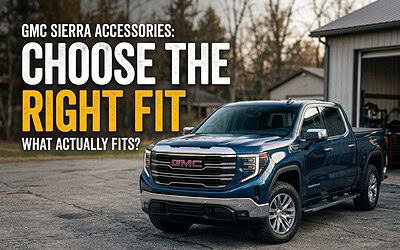
GMC pickup truck accessories can make a truck more practical for work, daily driving, hauling equipment, and weekend adventures. From bed covers and running boards to all-weather floor liners and cargo organizers, the right additions help address everyday problems without requiring major vehicle modifications.
The key is choosing accessories that fit your exact GMC model and serve a real purpose. A GMC Sierra 1500 used for commuting has different needs from a Sierra HD used for towing or a GMC Canyon driven on outdoor trips. Understanding those differences can help you avoid compatibility problems, unnecessary expenses, and installation mistakes.
Key Facts About GMC Pickup Truck Accessories
- Bed covers and cargo-management accessories help organize and protect equipment.
- Running boards and side steps can make entering and exiting a tall truck easier.
- Floor liners and seat protection help manage mud, water, dirt, and everyday wear.
- GMC Sierra and Canyon accessories are not automatically interchangeable.
- Model year, cab configuration, bed length, trim, and existing equipment can affect fitment.
- Electrical upgrades and towing equipment require particular attention to installation and specifications.
- Factory accessories and aftermarket alternatives should be compared by compatibility, function, warranty terms, and total installation cost.
What Are GMC Pickup Truck Accessories?
GMC pickup truck accessories are additional components or equipment designed to improve a truck’s usefulness, comfort, protection, or appearance. Some are made by General Motors for specific GMC vehicles, while others are produced by independent aftermarket manufacturers.
Common examples include truck bed covers, running boards, floor liners, bed mats, cargo organizers, exterior protection, storage solutions, and certain electronic accessories.
These items do different jobs. A bed cover helps shield cargo from weather and casual visibility. A floor liner catches dirt and spills. Running boards provide a more accessible step into the cab. A cargo organizer helps prevent tools and other equipment from moving around unnecessarily.
GMC’s official accessories catalog includes categories such as bed covers, assist steps, cargo liners, roof carriers, interior cargo management, floor protection, exterior accessories, and wheels. You can explore these categories through the official GMC Accessories website.
The important distinction is that an accessory should solve a problem you actually have. Adding equipment simply because it looks good in a photo may not deliver much practical value.
For example, someone who carries muddy work boots and tools every day may benefit more from protective floor liners and a bed-storage solution than from decorative exterior upgrades.
Which Accessories Make the Biggest Practical Difference?
The most useful accessories depend on how you use your truck. These categories are sensible starting points for many GMC pickup owners.
1. Truck bed covers and cargo protection
A truck bed cover, often called a tonneau cover, sits over the bed to help protect cargo from weather and reduce its visibility from outside the vehicle.
Common designs include soft roll-up, hard folding, retractable, and hinged covers. Each has trade-offs involving access, storage space, security, installation, and price.
A soft roll-up cover may provide convenient access across much of the bed. A hard folding cover may offer a more rigid barrier. A retractable cover can provide flexible access but may occupy some bed space, depending on its design.
No cover makes a pickup bed completely waterproof or guarantees that cargo cannot be stolen. Check the manufacturer’s information about weather sealing, locking, weight limits, and maintenance.
Bed mats, bed liners, and cargo dividers serve different purposes. A mat adds a protective layer, while a liner covers more of the bed surface. Dividers help keep loads organized.
Before selecting a cover, verify the truck’s model year, bed length, tailgate configuration, and any factory cargo-management equipment.
2. Running boards and side steps
Running boards and side steps help passengers enter and exit trucks with taller ride heights.
Fixed running boards remain in position, while powered steps extend when needed and retract when not in use. Some designs emphasize a broad stepping surface, while others prioritize ground clearance.
For a family truck or daily driver, a stable, nonslip stepping surface can make a noticeable difference. For off-road use, however, a wide step that hangs below the body may be more exposed to rocks and trail obstacles.
Consider the step’s mounting points, weight rating, ground clearance, surface grip, and corrosion resistance. Powered models also have motors, wiring, and moving parts that require appropriate installation and care.
GMC offers different step styles through its official exterior accessories catalog. Check the listed vehicle applications rather than assuming a step fits every GMC pickup.
3. Floor liners and interior protection
Floor liners are useful for drivers who regularly encounter rain, snow, dirt, sand, spilled drinks, or muddy footwear.
Unlike a basic carpet mat, a molded all-weather liner may have raised edges and a shape designed to contain debris and liquids. Fit matters because a liner that slides or interferes with the pedals can create a safety problem.
Choose a liner designed for the correct seating configuration and model year. Confirm that the factory retention clips are used where required and that the driver’s mat cannot move forward beneath the pedals.
Seat covers and door protection may also help limit wear from pets, work clothes, or outdoor equipment. However, covers must be compatible with the truck’s seating features, including airbags and seat-mounted controls where fitted.
4. Cargo organizers, storage, and roof carriers
Storage accessories help make better use of the available space in a truck.
Bed dividers, toolboxes, cargo nets, console organizers, and under-seat storage can help separate equipment and keep frequently used items within reach. Roof carriers can provide additional carrying options when compatible with the vehicle and the intended load.
Before adding storage equipment, consider what you transport and how often you need access to it.
A contractor carrying tools may need secure, weather-resistant storage. A family taking road trips may value a simple organizer for small items. Someone carrying long equipment may need a rack system rather than a traditional toolbox.
Check attachment points, load limits, clearance, and whether the equipment restricts access to the tailgate or other factory features. Secure cargo properly, and never exceed the vehicle’s applicable load ratings.
5. Exterior protection and appearance
Splash guards, mudflaps, hood deflectors, fender flares, emblems, and approved exterior accessories can change the appearance of a GMC truck while addressing specific protection needs.
Mudflaps can help reduce the amount of road debris thrown toward the bodywork and vehicles behind you. Fender flares may provide additional coverage for certain wheel and tire setups, but their suitability depends on the vehicle and local requirements.
Appearance accessories should not interfere with lighting, cameras, sensors, cooling airflow, or driver visibility. Avoid assuming that an item advertised as universal will fit correctly without modifications.
6. Wheels, tires, and off-road equipment
Wheels, tires, recovery equipment, and selected off-road accessories can be relevant for owners who drive on rough roads or use their trucks for outdoor activities.
These changes deserve more attention than simple cosmetic upgrades. Wheel and tire combinations affect clearance and may influence handling, speedometer accuracy, braking behavior, and the vehicle’s overall suitability for its intended use.
Use wheel and tire combinations approved for your specific vehicle. Check load ratings, offsets, tire dimensions, clearance, and any requirements described in the owner’s manual or manufacturer documentation.
Recovery equipment should also be selected for the intended application and used according to its instructions. A recovery point or strap that looks strong is not necessarily suitable for every recovery situation.
7. Lighting and electronic accessories
Auxiliary lights, dash cameras, phone mounts, chargers, and other electronic accessories can add convenience when installed correctly.
However, electrical accessories can create problems if they are wired improperly, draw power when the truck is parked, or interfere with factory electronics.
Check power requirements, fuse protection, grounding, and installation instructions. Do not cut into factory wiring or modify safety-related systems without understanding the consequences. If an accessory requires complex wiring or vehicle-system integration, professional installation may be the safer option.
How to Choose Accessories for Your GMC Model
GMC pickup owners should begin with the exact vehicle rather than shopping by brand name alone.
The Sierra 1500, Sierra HD models, and Canyon differ in size, configuration, intended use, and available equipment. Accessories may also vary between model years, trim levels, cab styles, and bed configurations.
Even two trucks carrying the same model name can have different fitment requirements.
Before ordering, identify these details:
- Model and year: Confirm the exact vehicle application.
- Cab configuration: Crew cab, double cab, and other configurations can have different requirements.
- Bed length: A cover or rack must match the truck bed.
- Trim and factory equipment: Existing steps, tailgate features, sensors, and other equipment may affect compatibility.
- Intended use: Daily commuting, work, towing, and off-road driving create different needs.
- Installation requirements: Determine whether the accessory requires drilling, electrical work, special tools, or professional installation.
GM recommends using your vehicle identification number (VIN) to help identify suitable parts and accessories. Its official parts and accessories support guide explains how to search by VIN, year, make, model, or part number.
If you are uncertain about a fitment detail, contact a GMC dealer or the accessory manufacturer before ordering.
Factory vs. Aftermarket GMC Accessories
Factory accessories and aftermarket alternatives can both be useful. Neither category is automatically the right choice for every situation.
Factory accessories are developed for specified GM vehicles and applications. Aftermarket products range from simple protective mats to specialized equipment made for particular truck configurations.
Used accessories may cost less, but their condition and completeness need closer inspection.
| Feature | Factory GMC accessory | Aftermarket accessory | Used accessory |
|---|---|---|---|
| Fitment | Check the listed GMC application | Verify exact compatibility | Confirm original application |
| Selection | Vehicle-specific catalog options | Broad range of designs | Depends on local availability |
| Condition | Normally supplied new | Normally supplied new | Depends on previous use |
| Installation | Instructions or dealer support may be available | Varies by manufacturer | Hardware or instructions may be missing |
| Warranty | Check applicable terms | Check seller and manufacturer terms | Coverage may be limited or unavailable |
| Main consideration | Application and total cost | Fitment and product quality | Wear, damage, and missing parts |
Compare the actual product specifications rather than relying only on the label. Ask whether installation hardware is included, whether the accessory affects existing vehicle features, and what warranty applies.
GM also provides guidance on scheduling accessory installation, including finding the correct item and contacting a participating service provider.
Common Buying Mistakes and Maintenance Concerns
A frequent mistake is assuming that an accessory fits every truck in a model family. Product photos and broad descriptions can be misleading when the item is intended for a particular bed length, trim, or generation.
Another mistake is comparing purchase prices without including installation. A low-cost accessory may require additional hardware, wiring, adapters, or professional labor. Those costs can change the overall value.
Pay attention to these potential problems:
- Poor fitment: Gaps, misaligned mounting holes, or interference with factory equipment may indicate that the accessory is incorrect for the truck.
- Loose hardware: Steps, racks, and mounted storage should be inspected according to the manufacturer’s instructions.
- Water intrusion: Check cover seals and drainage paths as directed by the manufacturer.
- Corrosion: Clean exposed hardware and inspect areas that collect road salt, mud, or moisture.
- Electrical issues: If battery problems or warning lights appear after installing electronics, inspect the installation and seek qualified diagnosis.
- Safety interference: Make sure mats, racks, lights, and other additions do not obstruct pedals, visibility, sensors, or required vehicle functions.
Do not assume that every problem appearing after an installation was caused by the accessory. Treat the timing as a reason to investigate, not proof of a particular fault.
Keep receipts, installation instructions, and part numbers. These records make future maintenance, warranty questions, and replacement purchases easier to manage.
What GMC Owners Should Check Before Installing an Accessory
A little preparation can prevent many avoidable issues.
Start by reading the instructions and confirming that all necessary mounting hardware is present. Compare the supplied parts with the installation diagram before removing factory components.
For accessories attached to the body or frame, use the specified mounting locations and tightening procedures. Avoid improvising fasteners or drilling into areas that may contain wiring, structural components, or other vehicle systems.
For electrical accessories, verify the power source, fuse requirements, grounding method, and whether the device should remain powered when the ignition is off. More complex installations may require a qualified technician.
After installation, check that doors, tailgates, seat adjustments, cameras, and other affected features still work as intended. Follow the manufacturer’s inspection schedule, especially for accessories exposed to vibration, water, dirt, or frequent loading.
If the accessory affects towing, tires, suspension, or other safety-critical systems, consult the vehicle documentation and a qualified professional before using the modified truck for its intended load.
What These Accessories Mean for Your Truck Going Forward
The most useful GMC pickup truck accessories are the ones that solve recurring problems without compromising fitment, safety, or reliability.
For everyday driving, floor protection, practical storage, and convenient steps may be enough. For work, bed protection and secure cargo organization may matter more. For outdoor use, carefully selected racks, tires, and recovery equipment may deserve attention.
There is no universal upgrade list that suits every GMC pickup. Start with the truck’s exact configuration, decide what needs improvement, and verify the accessory’s compatibility before spending money.
The best approach is to prioritize function first, compare the full cost of ownership, and maintain each addition according to its instructions. That way, your accessories support the way you actually use your truck rather than adding complexity you do not need.
External Resources
- Official GMC Accessories Catalog — Explore vehicle-specific accessories and categories.
- GM Parts and Accessories Help — Learn how to identify suitable parts using your VIN or vehicle details.
- GM Accessory Installation Guide — Review the manufacturer’s process for finding and arranging installation.
- Official GMC Owner Center and Manuals — Find owner resources and information about manuals and vehicle support.







0 Comments